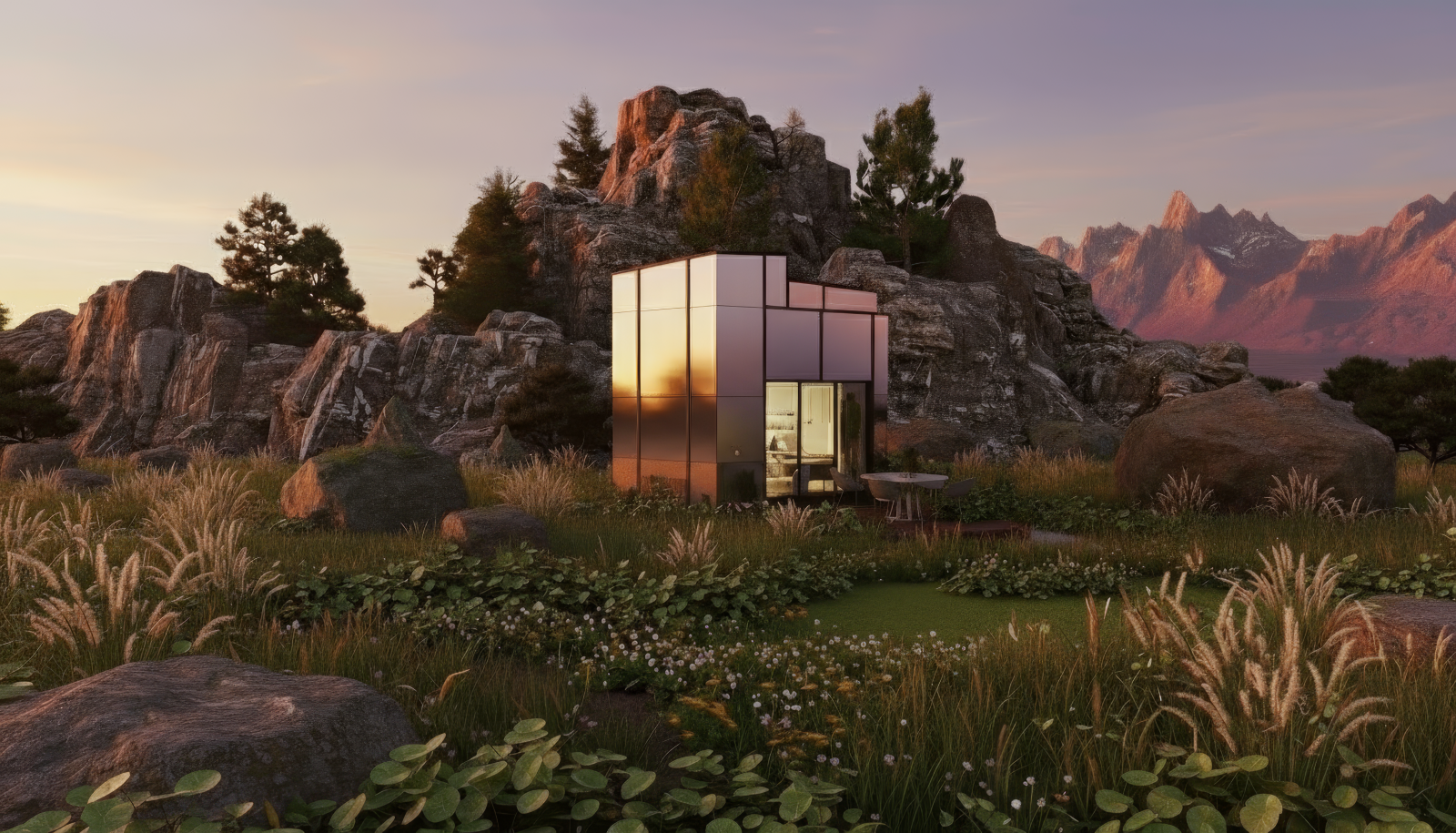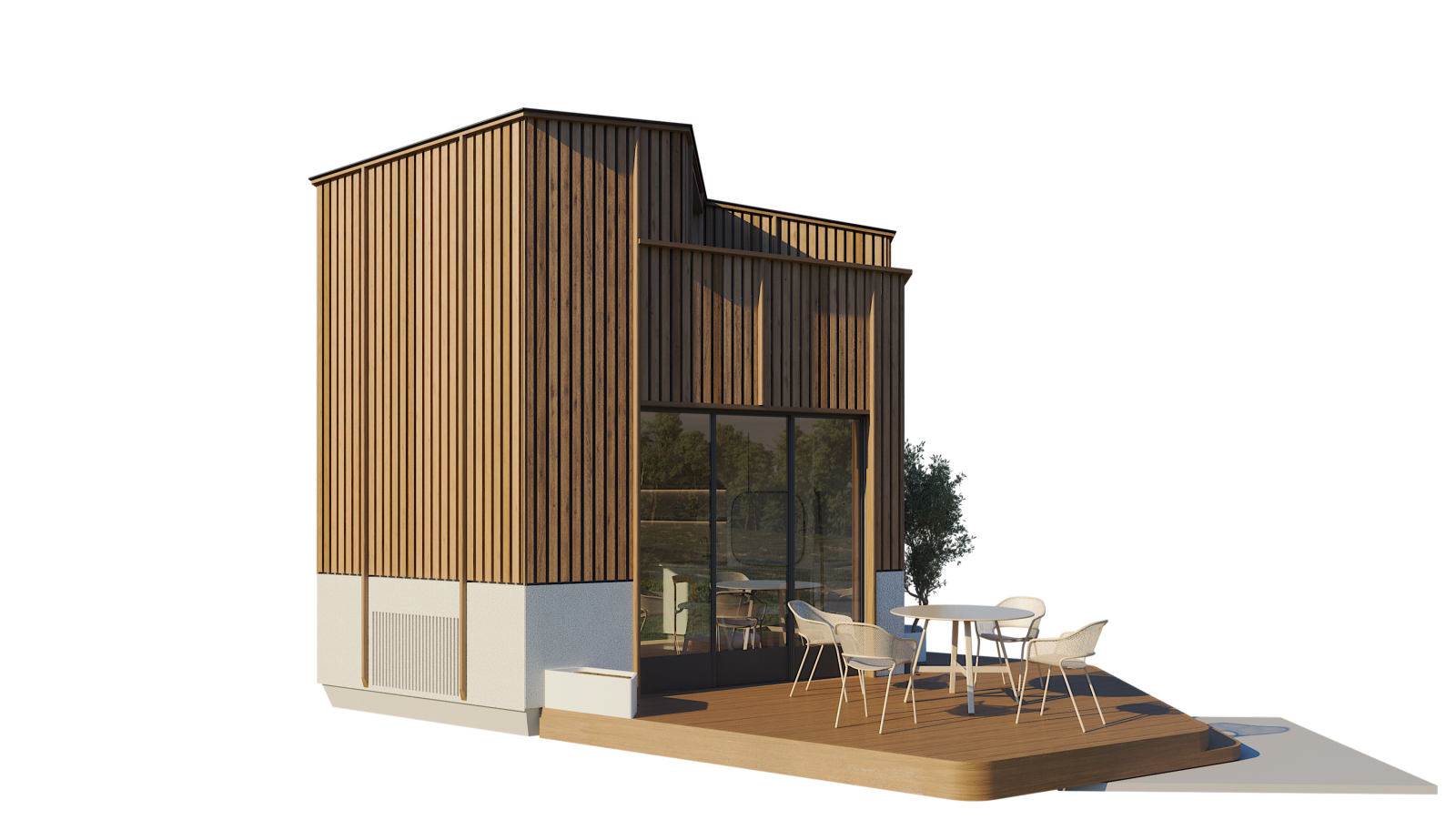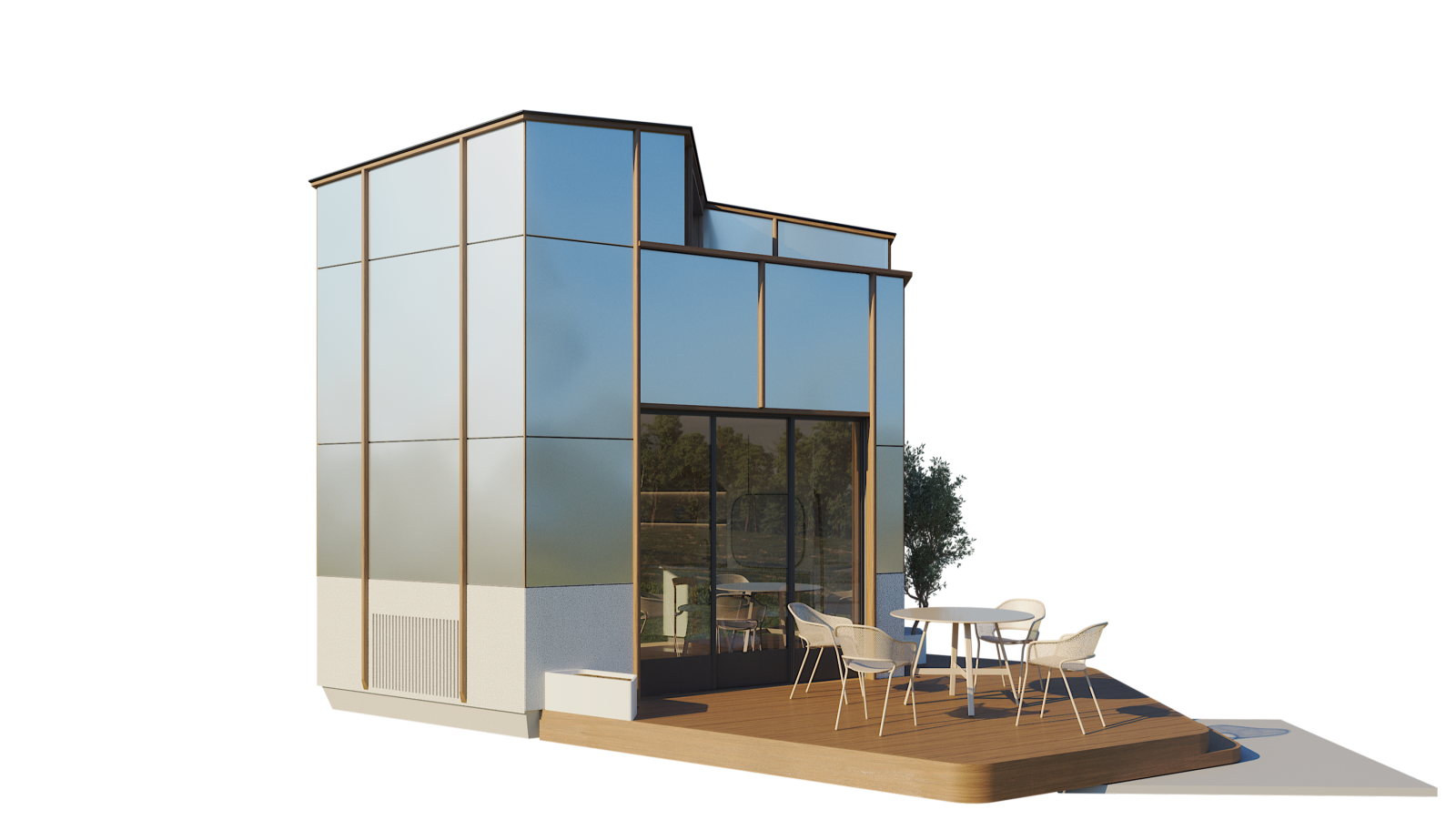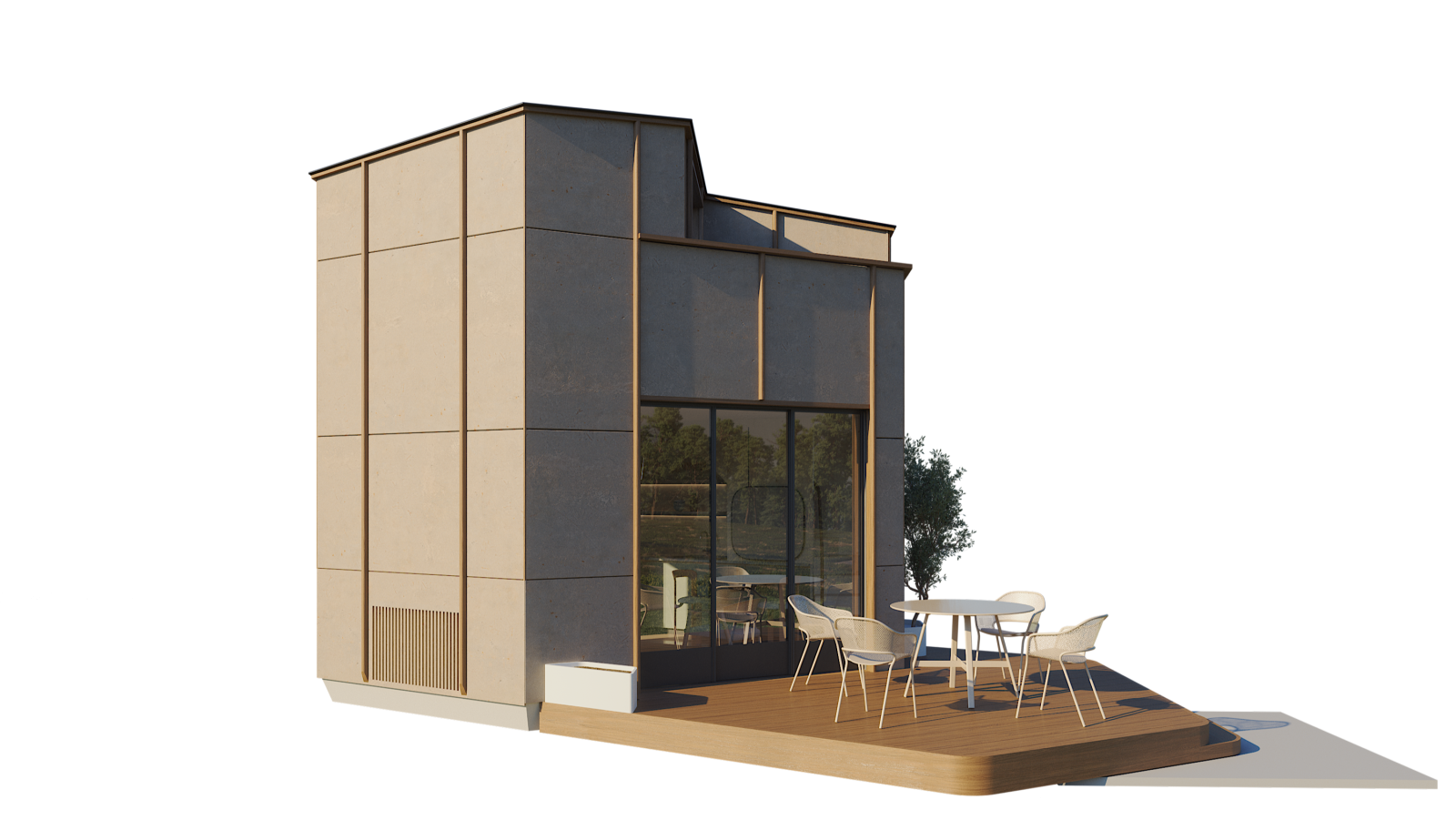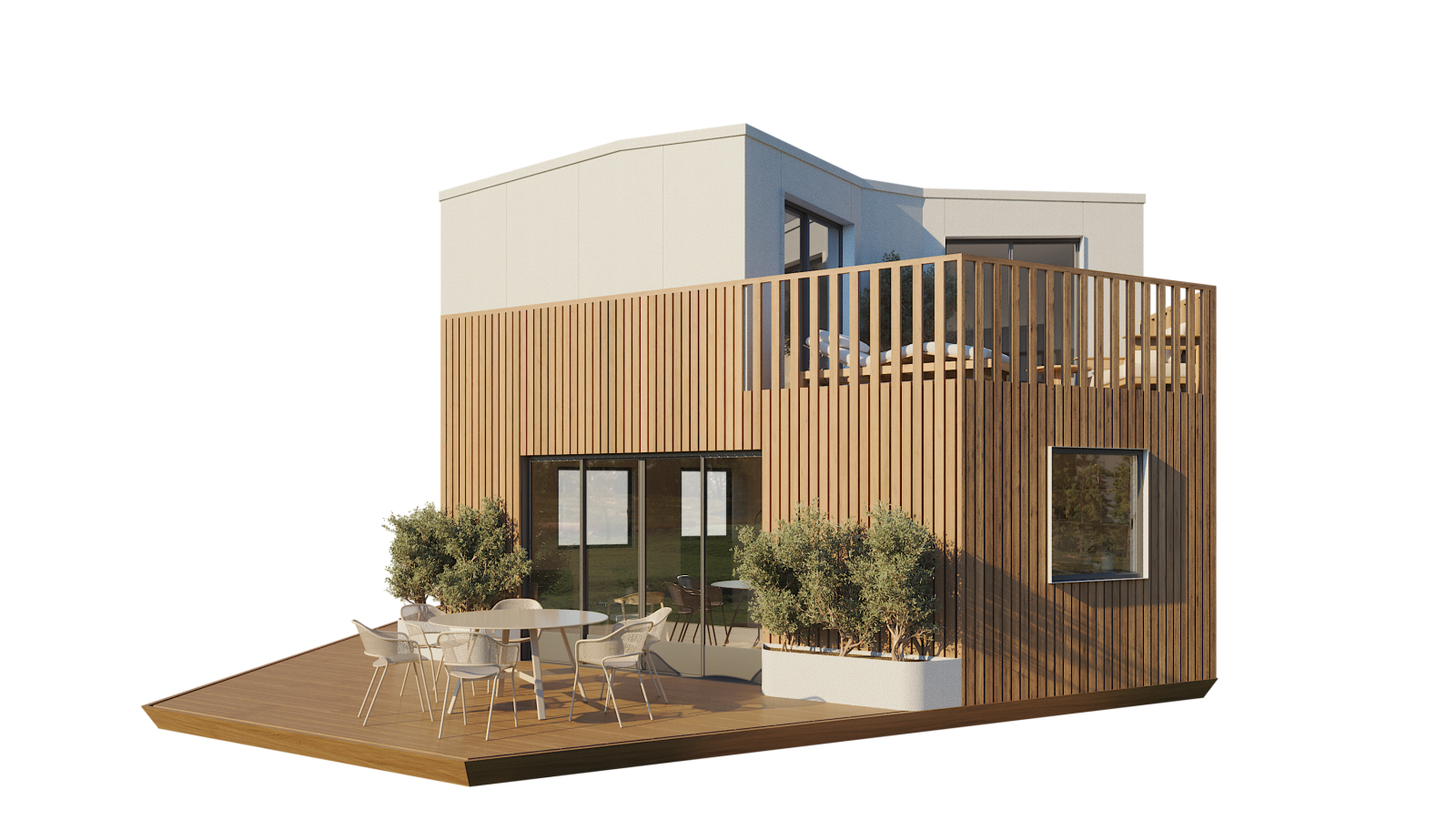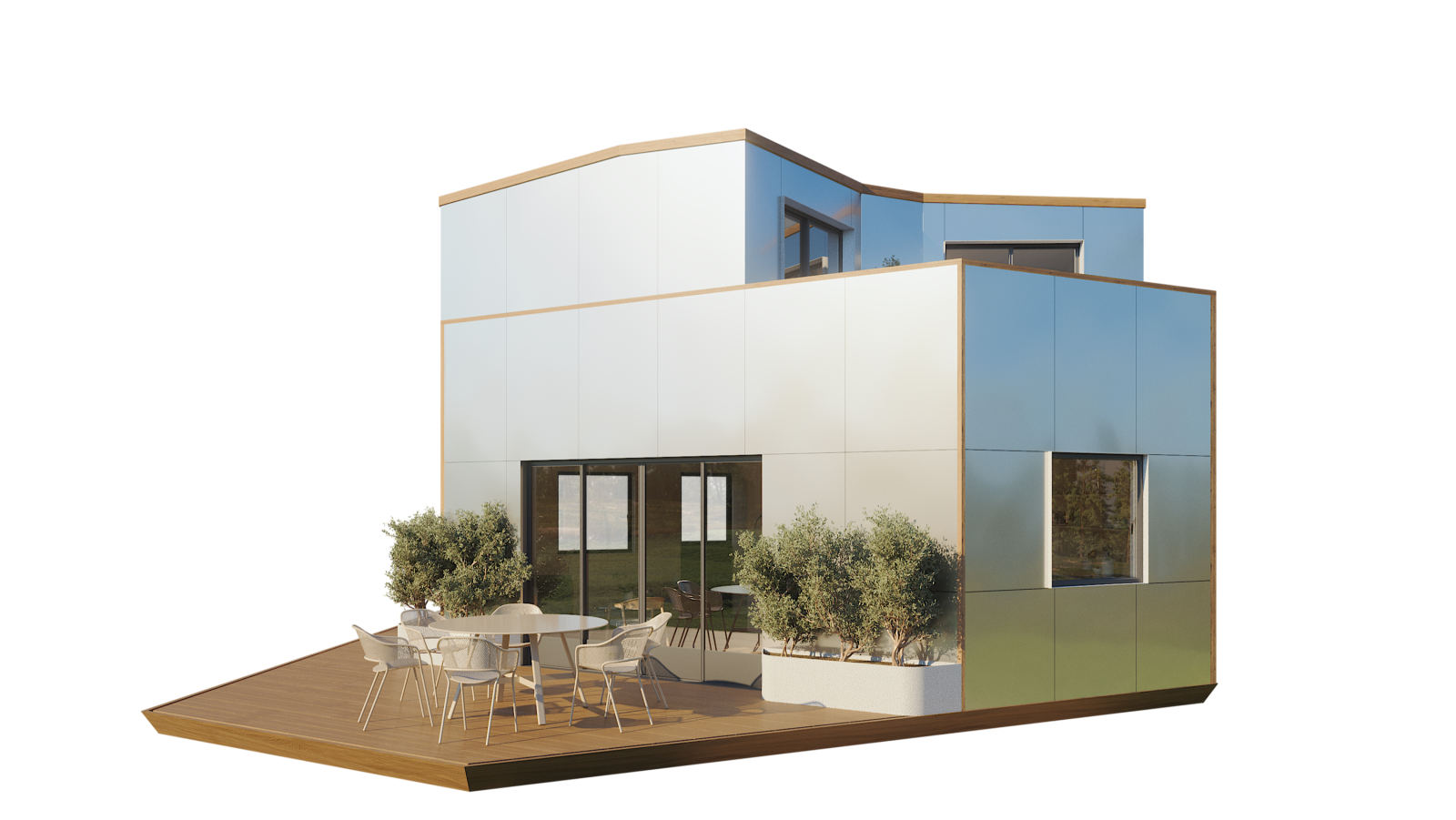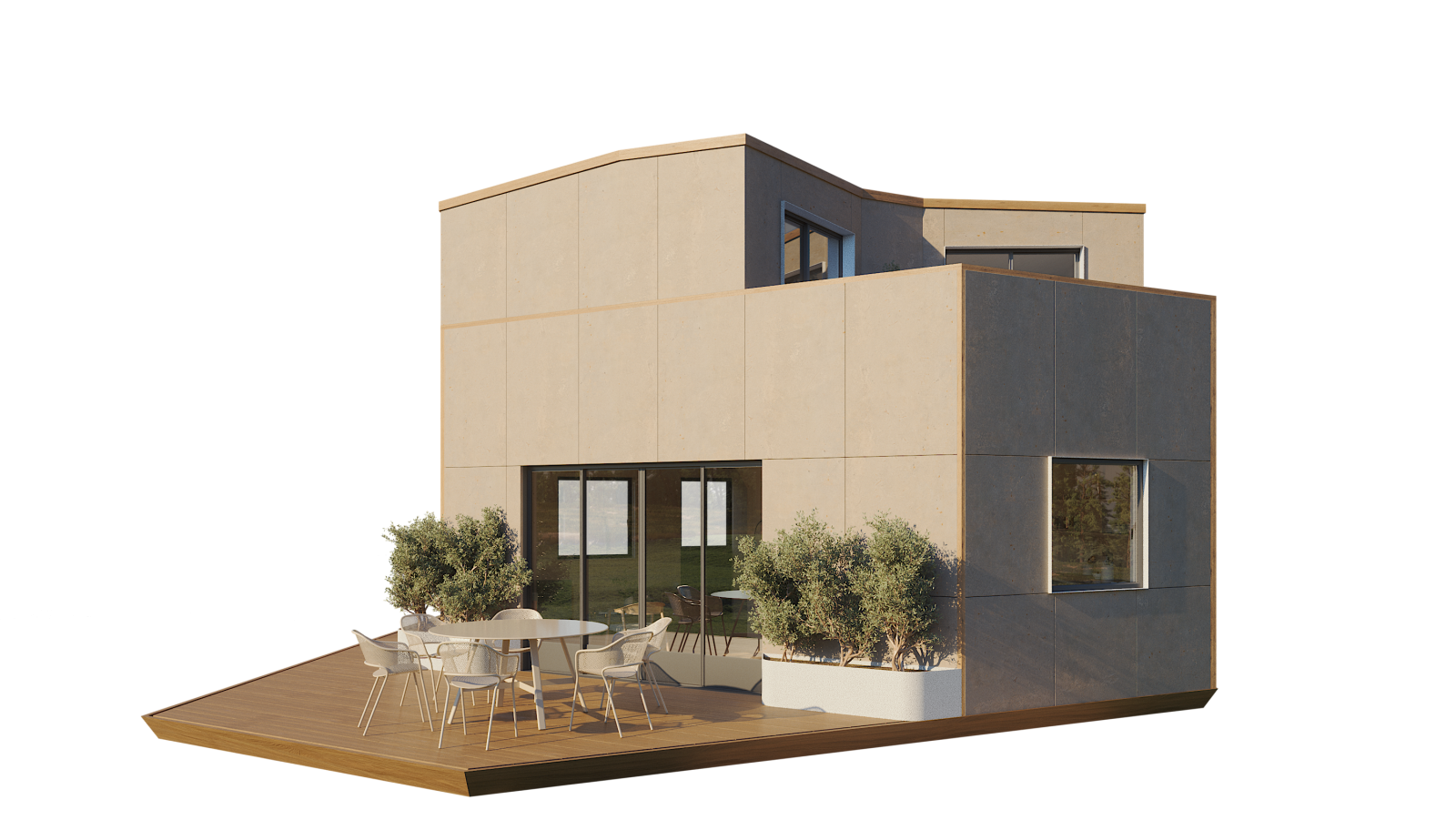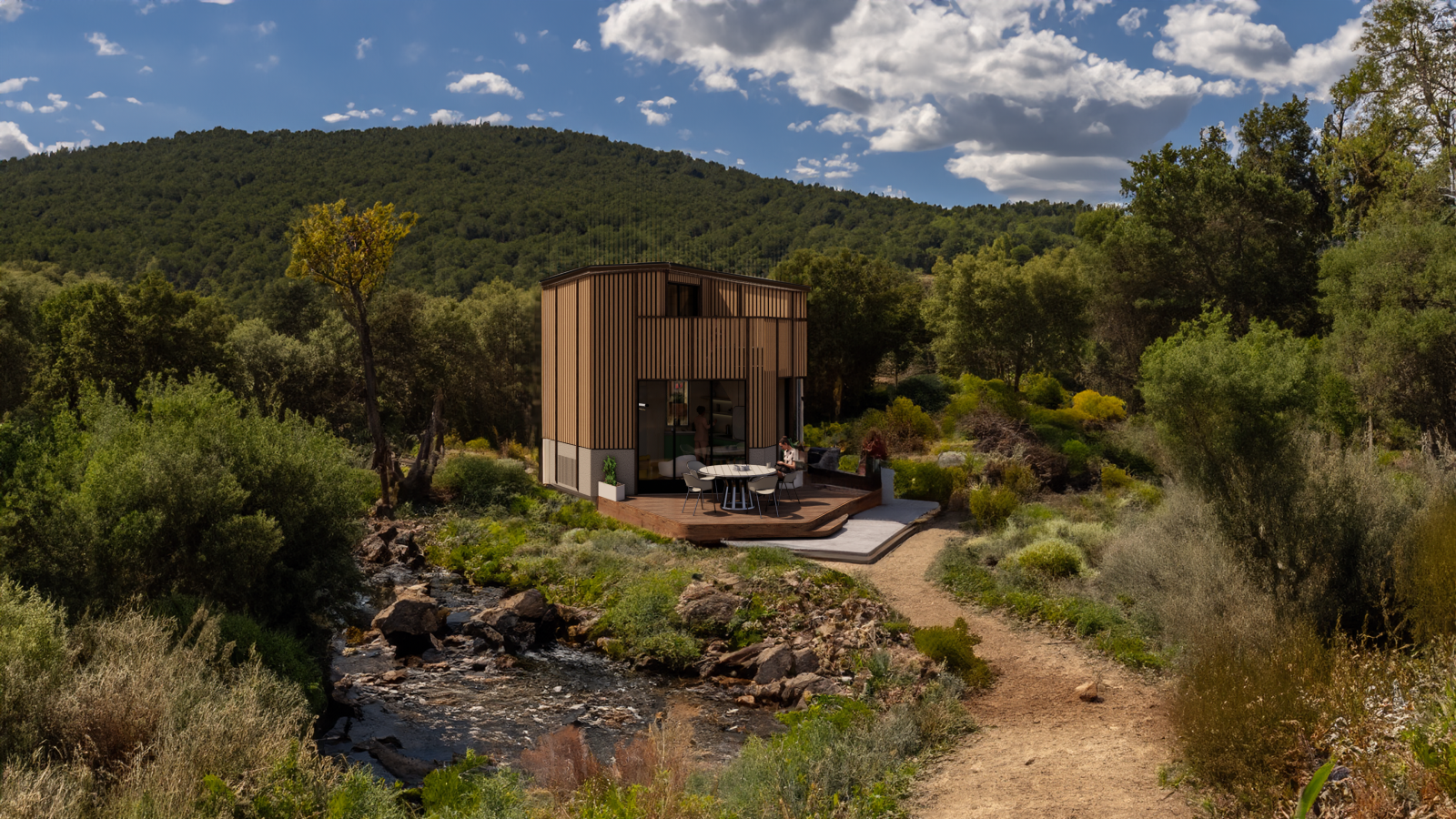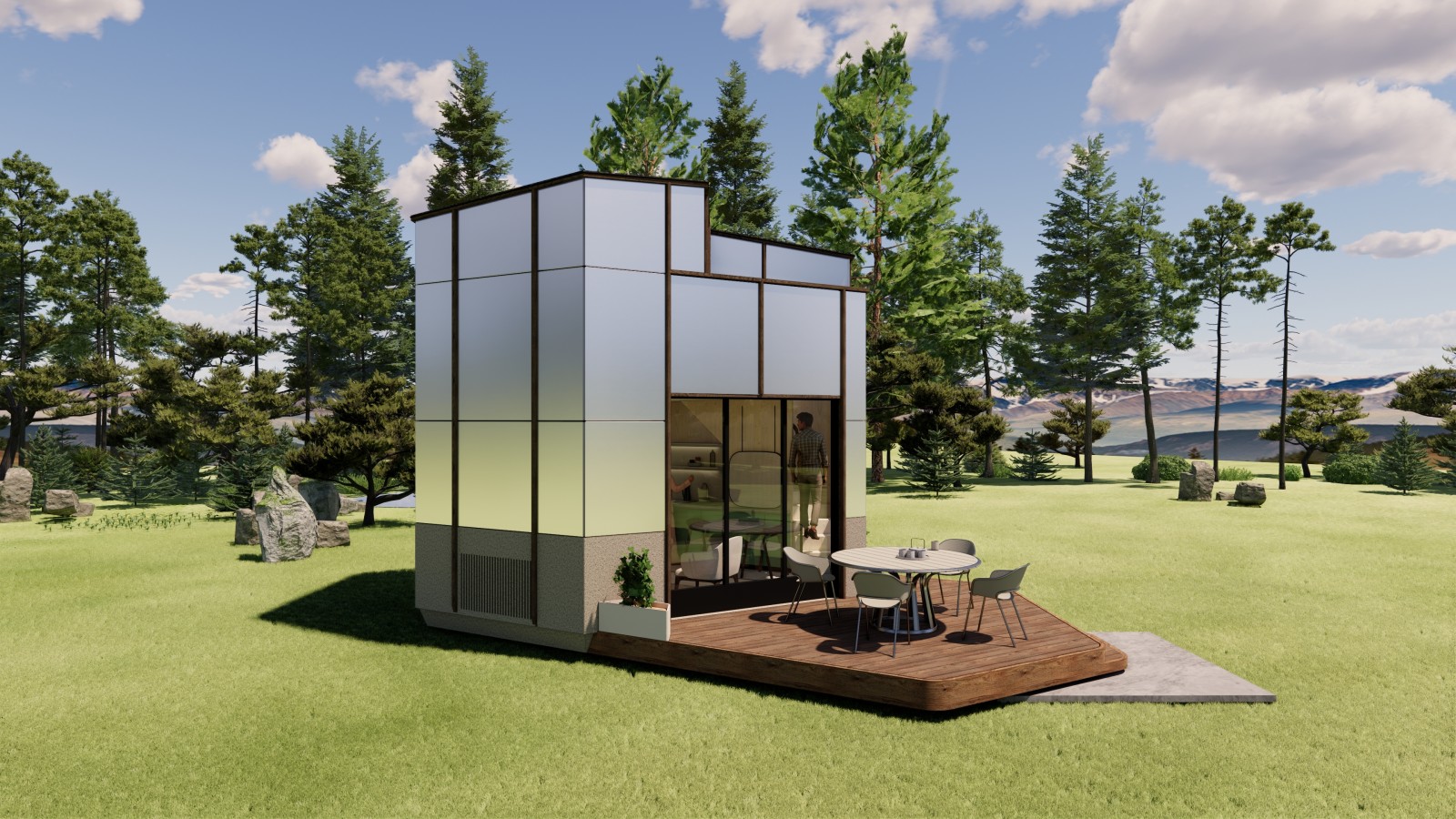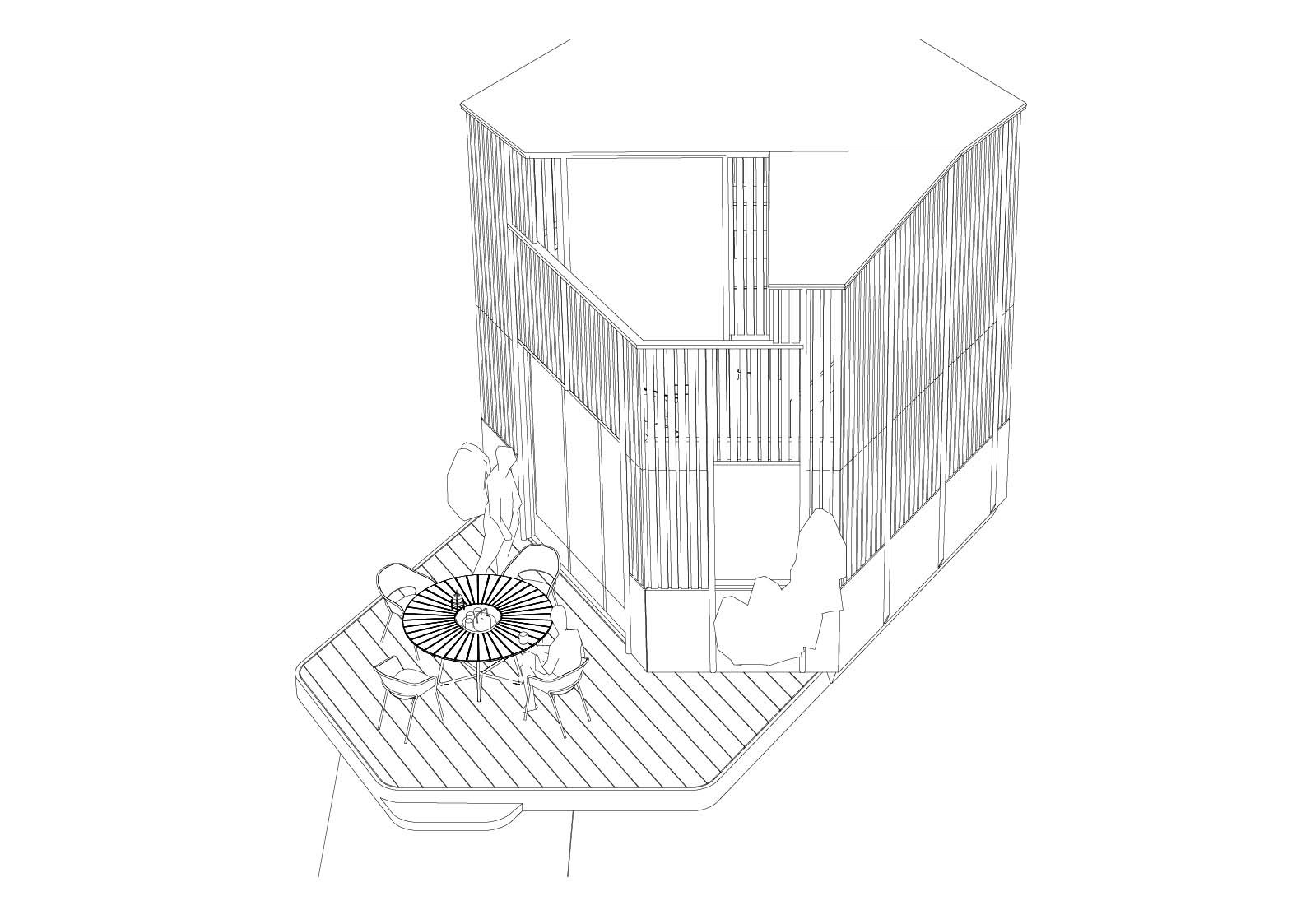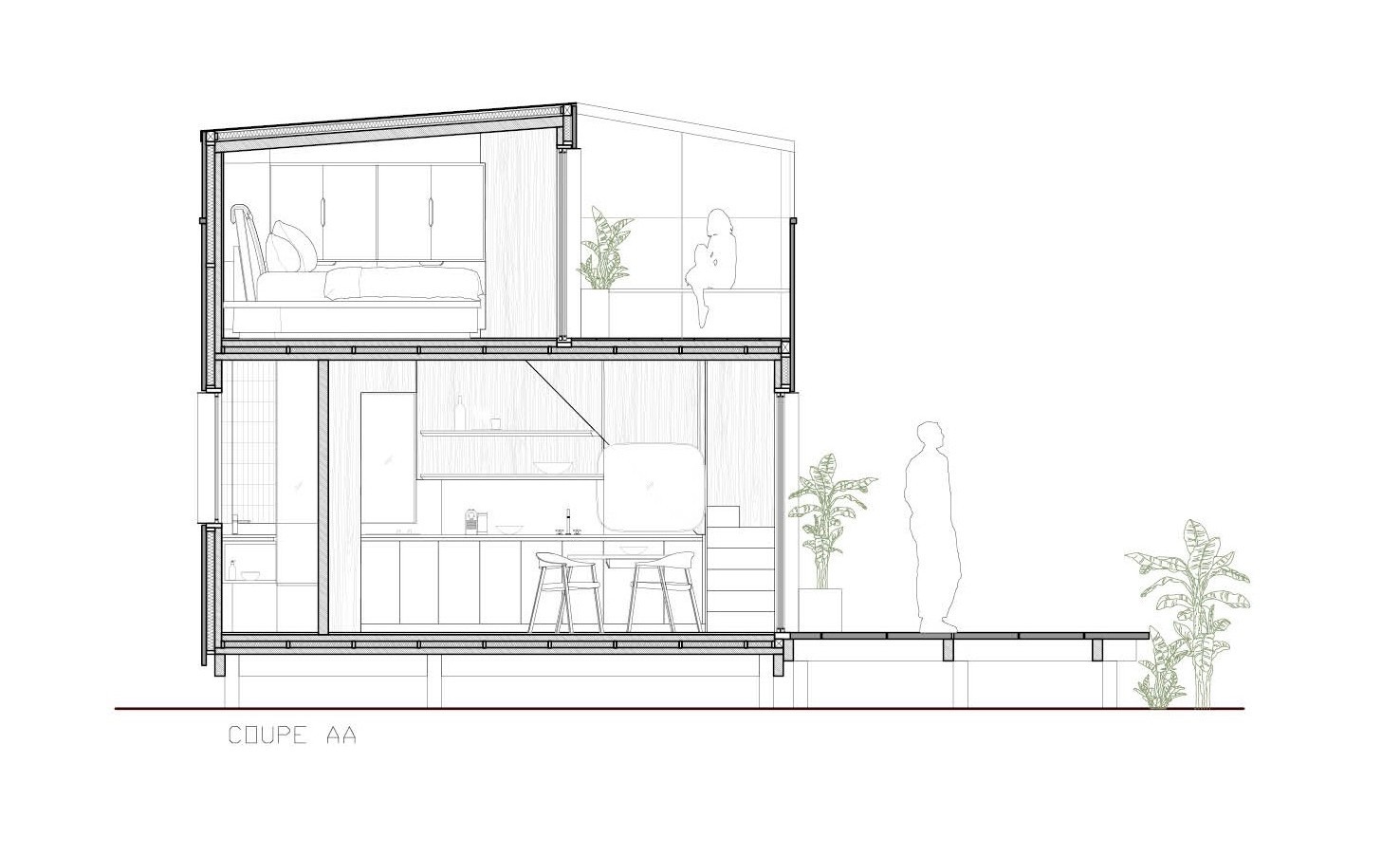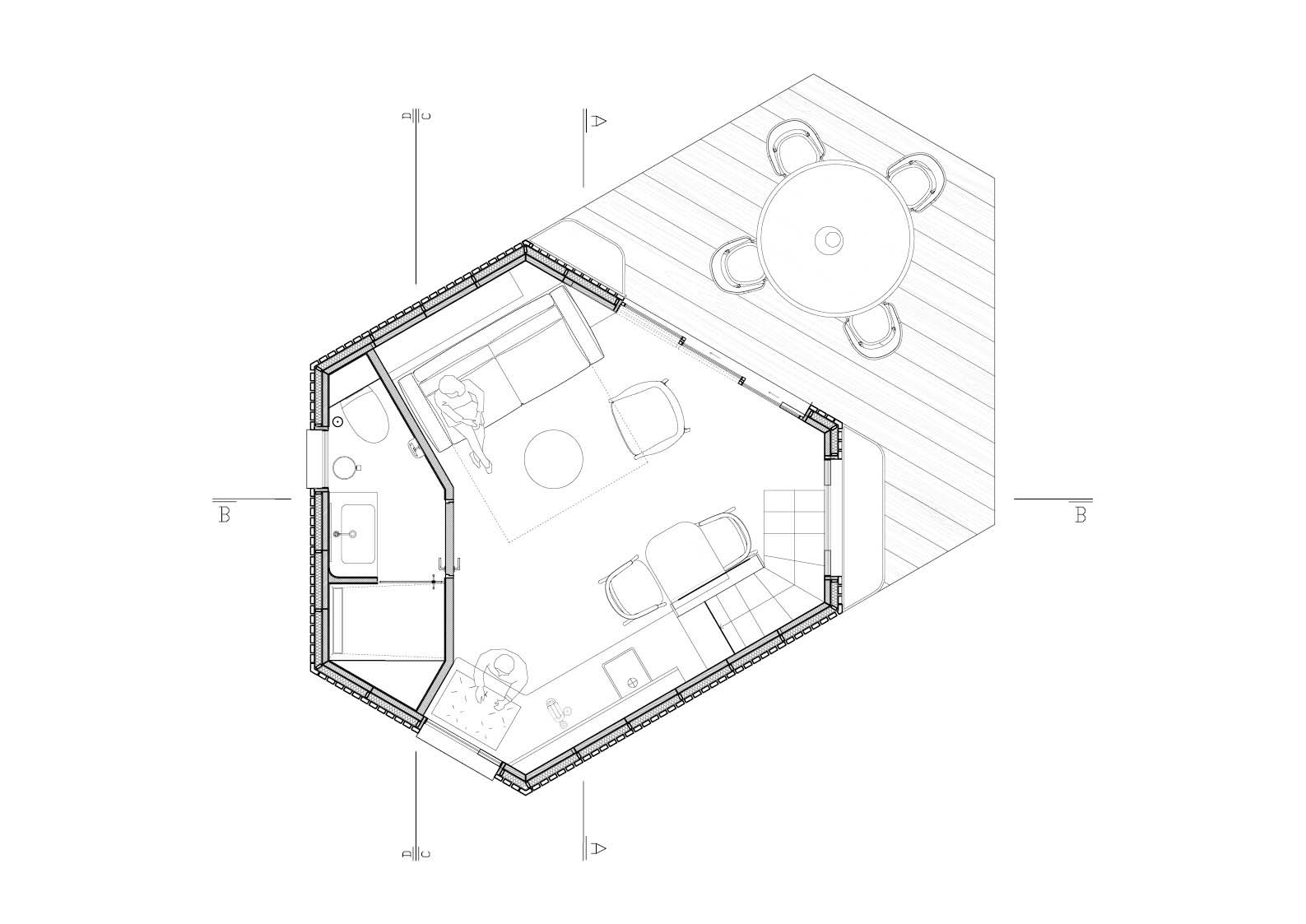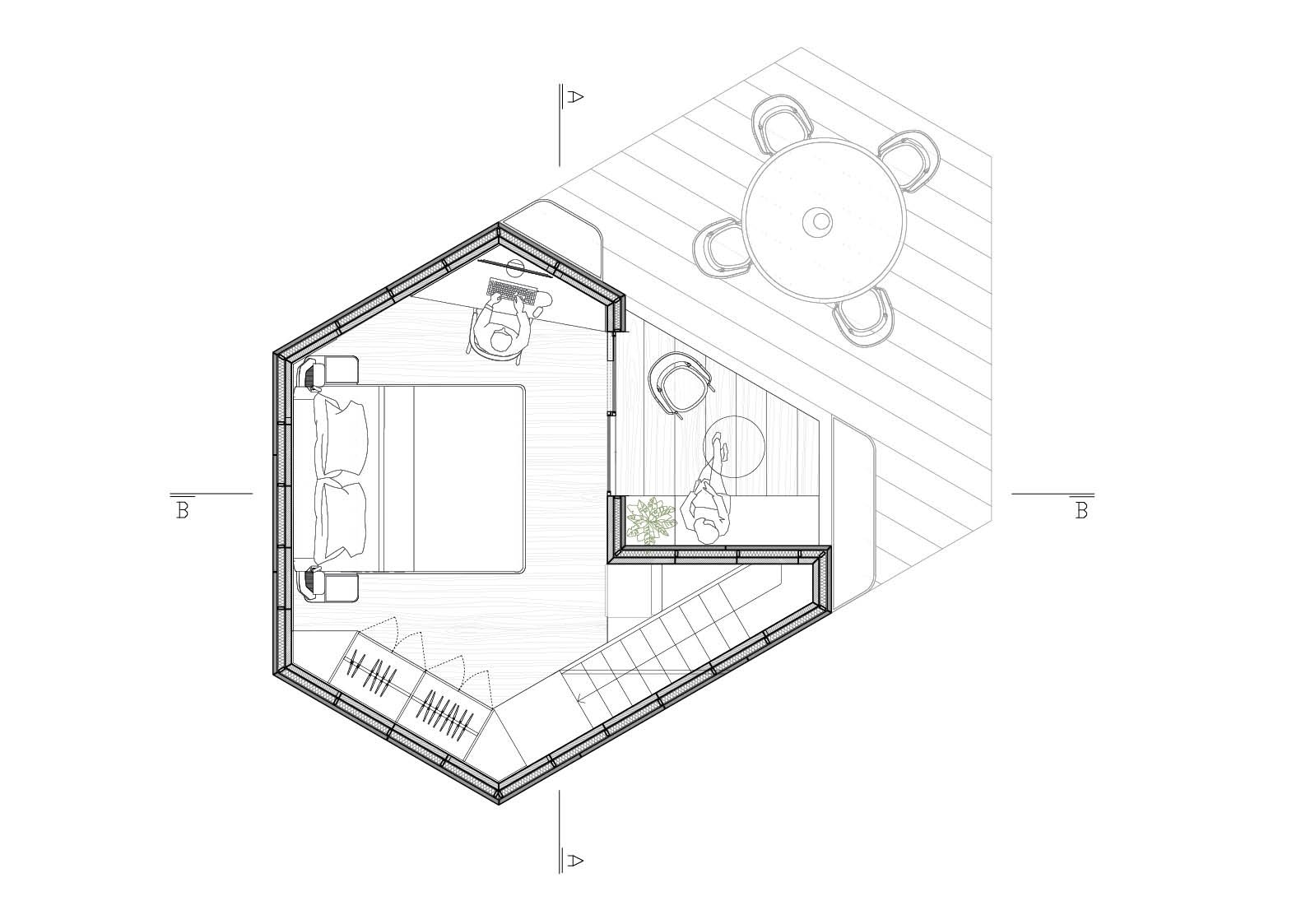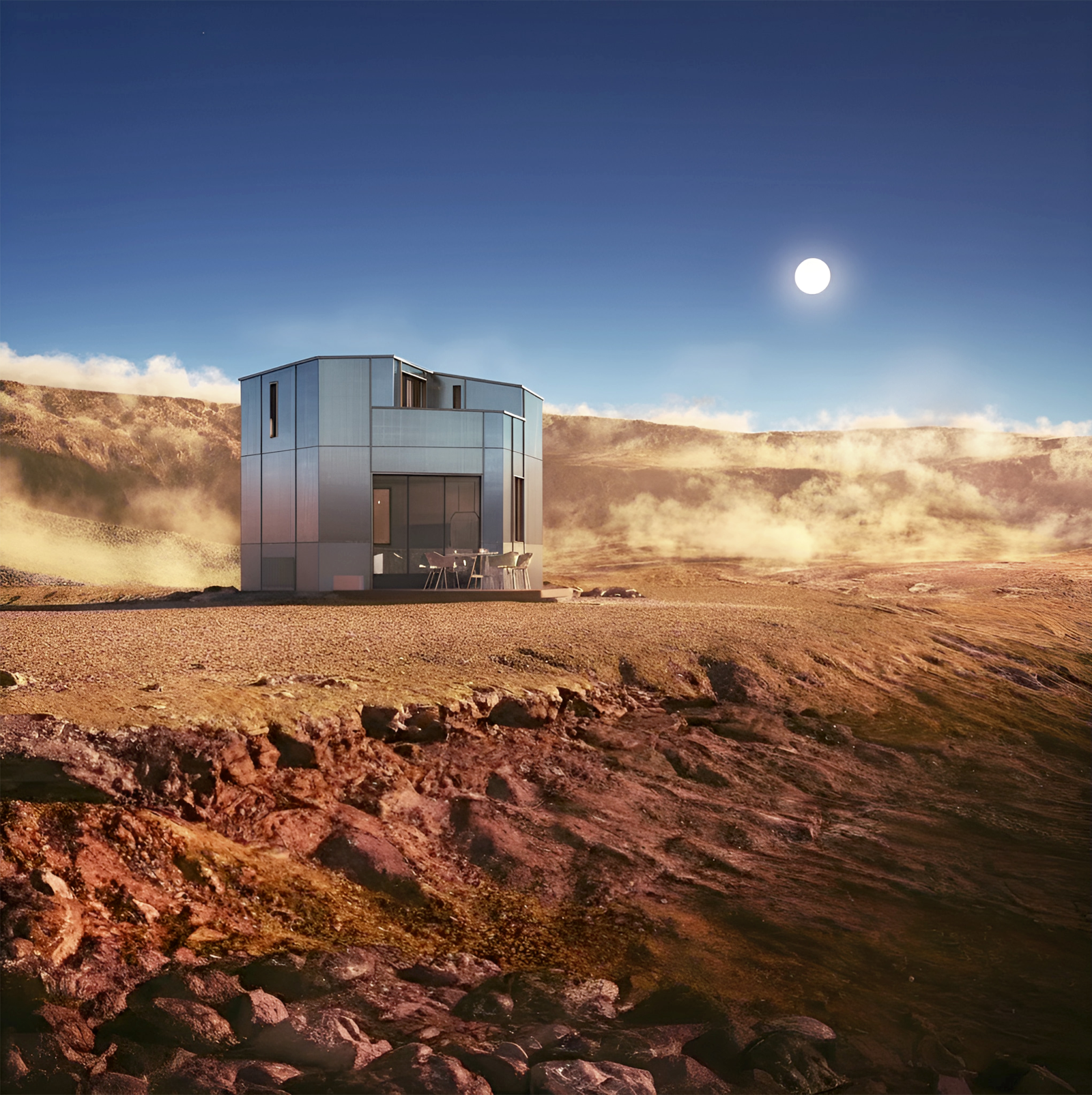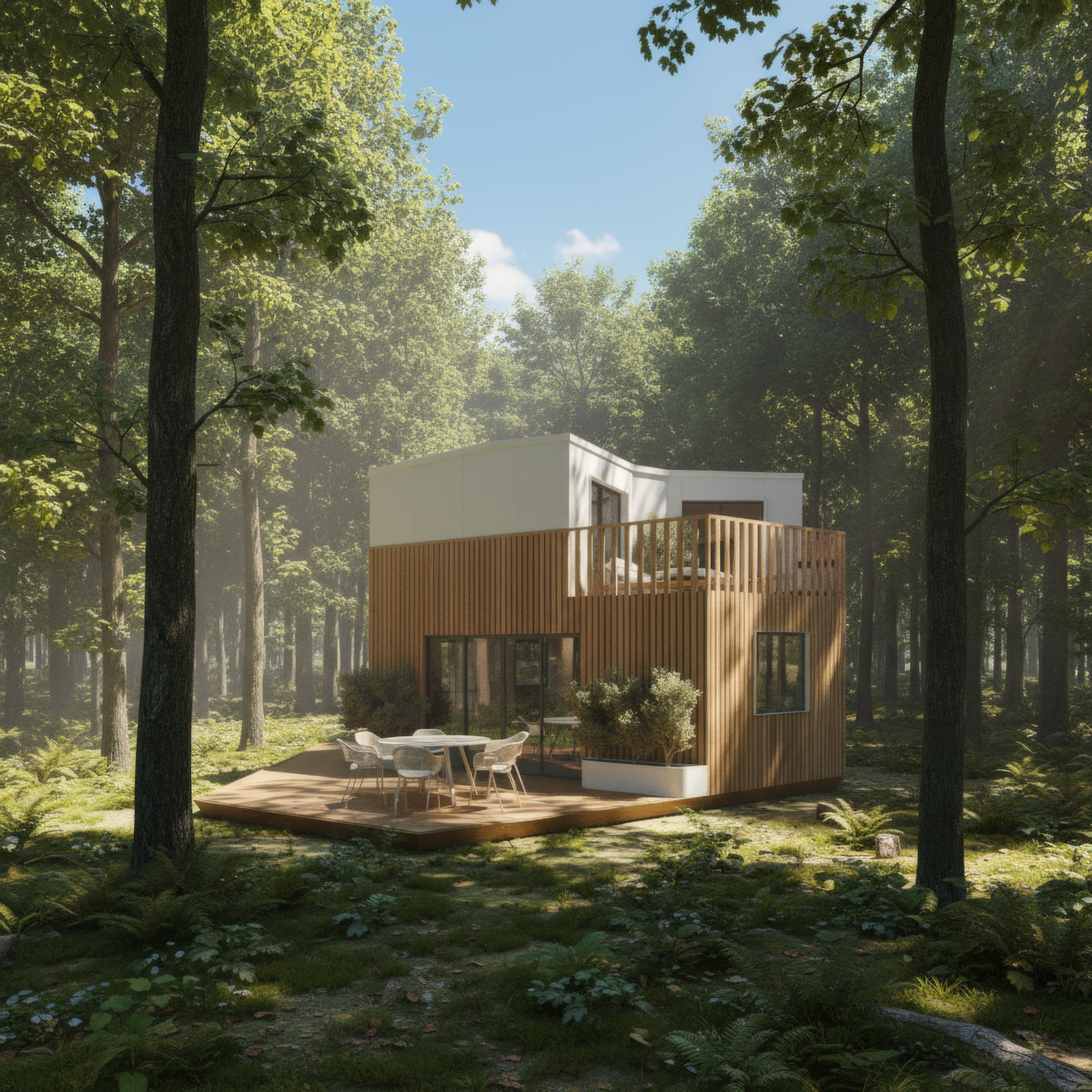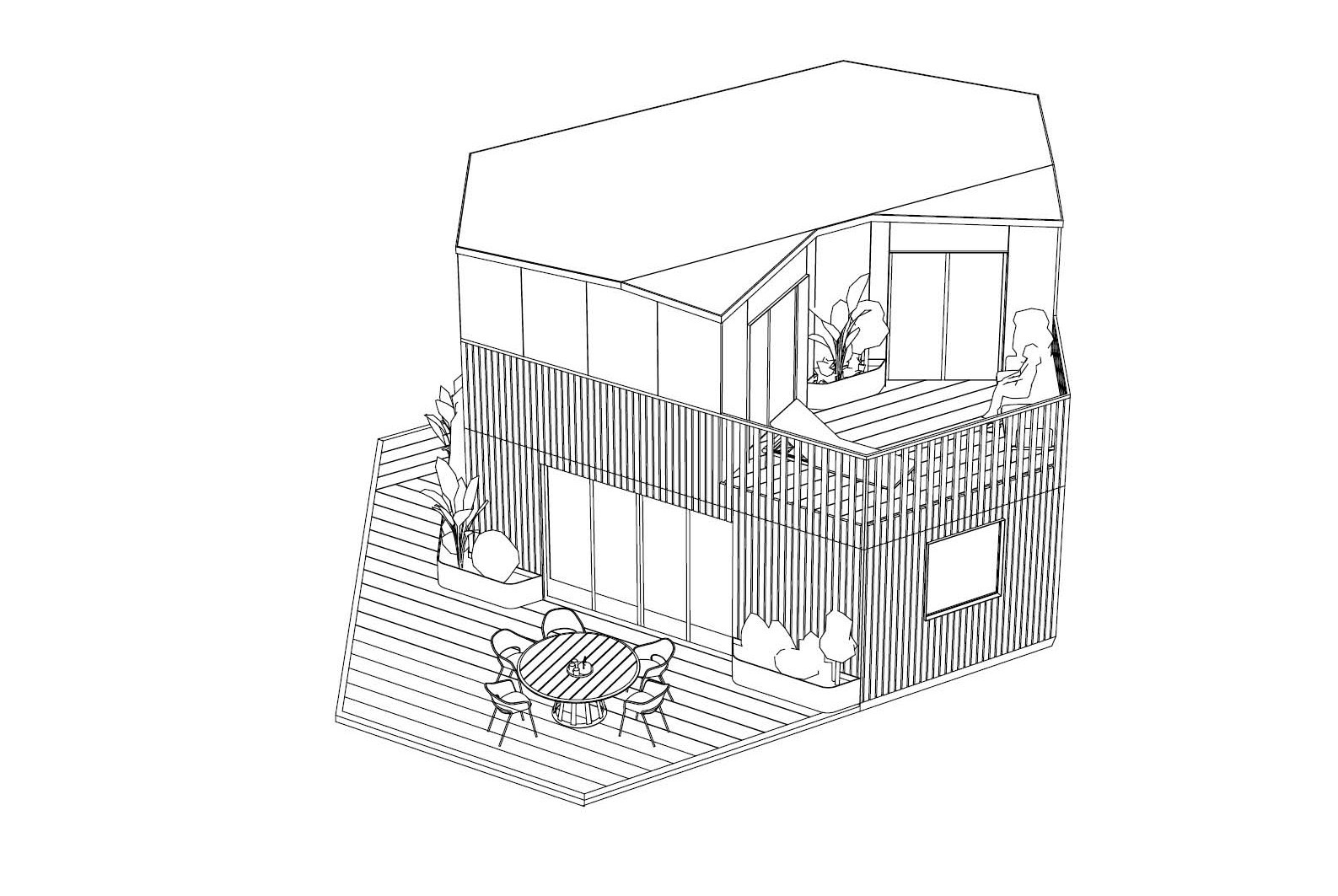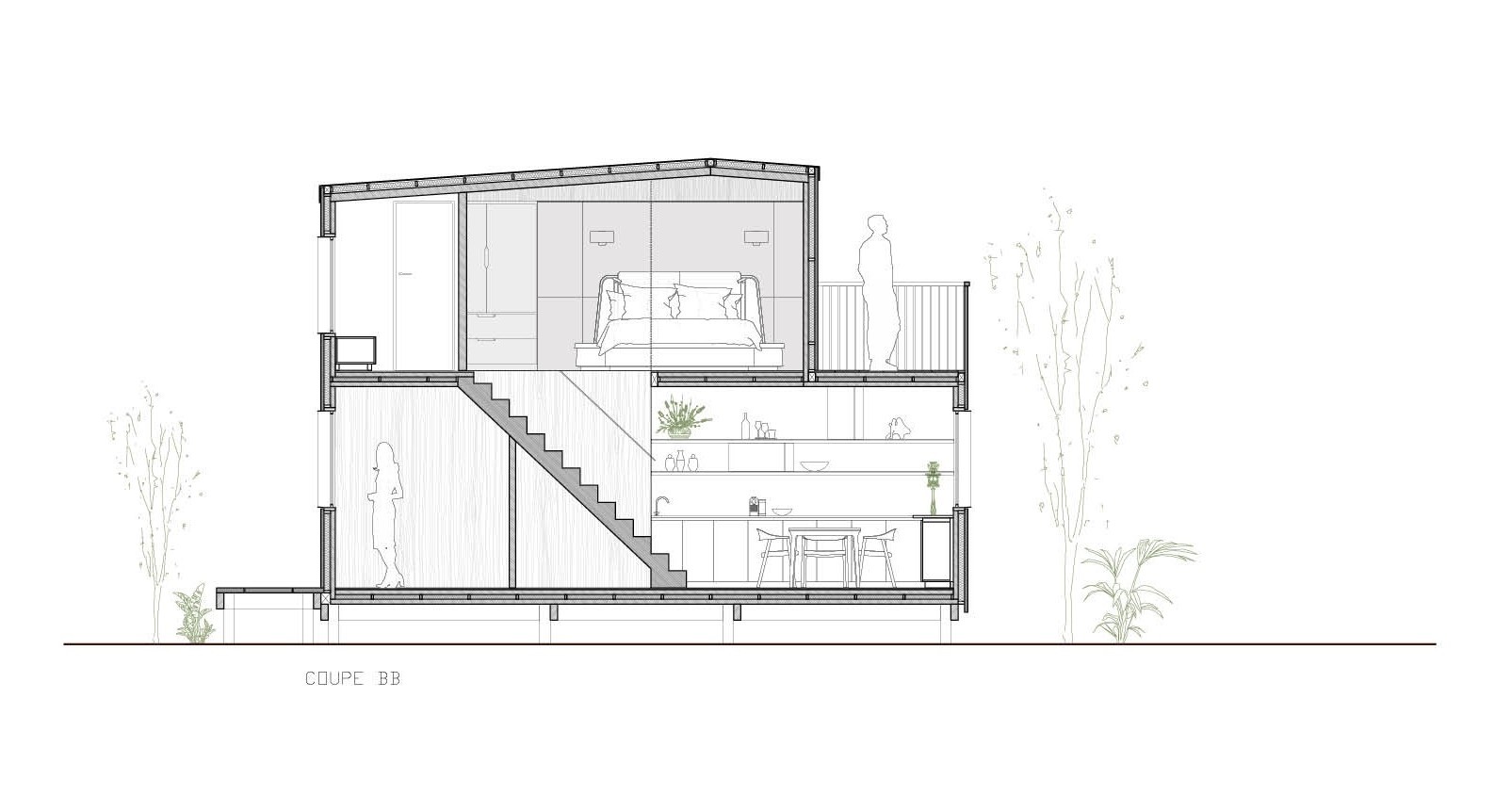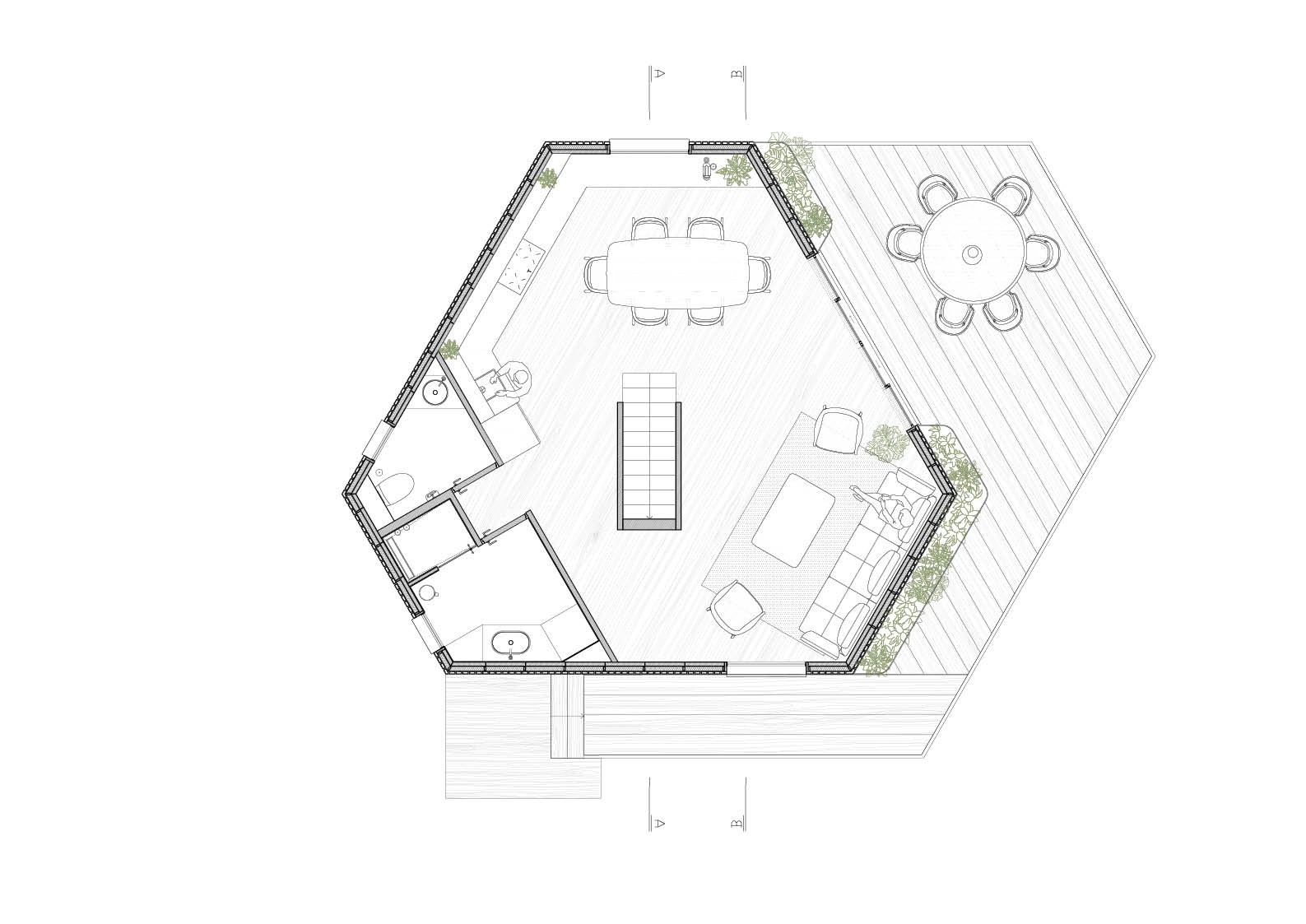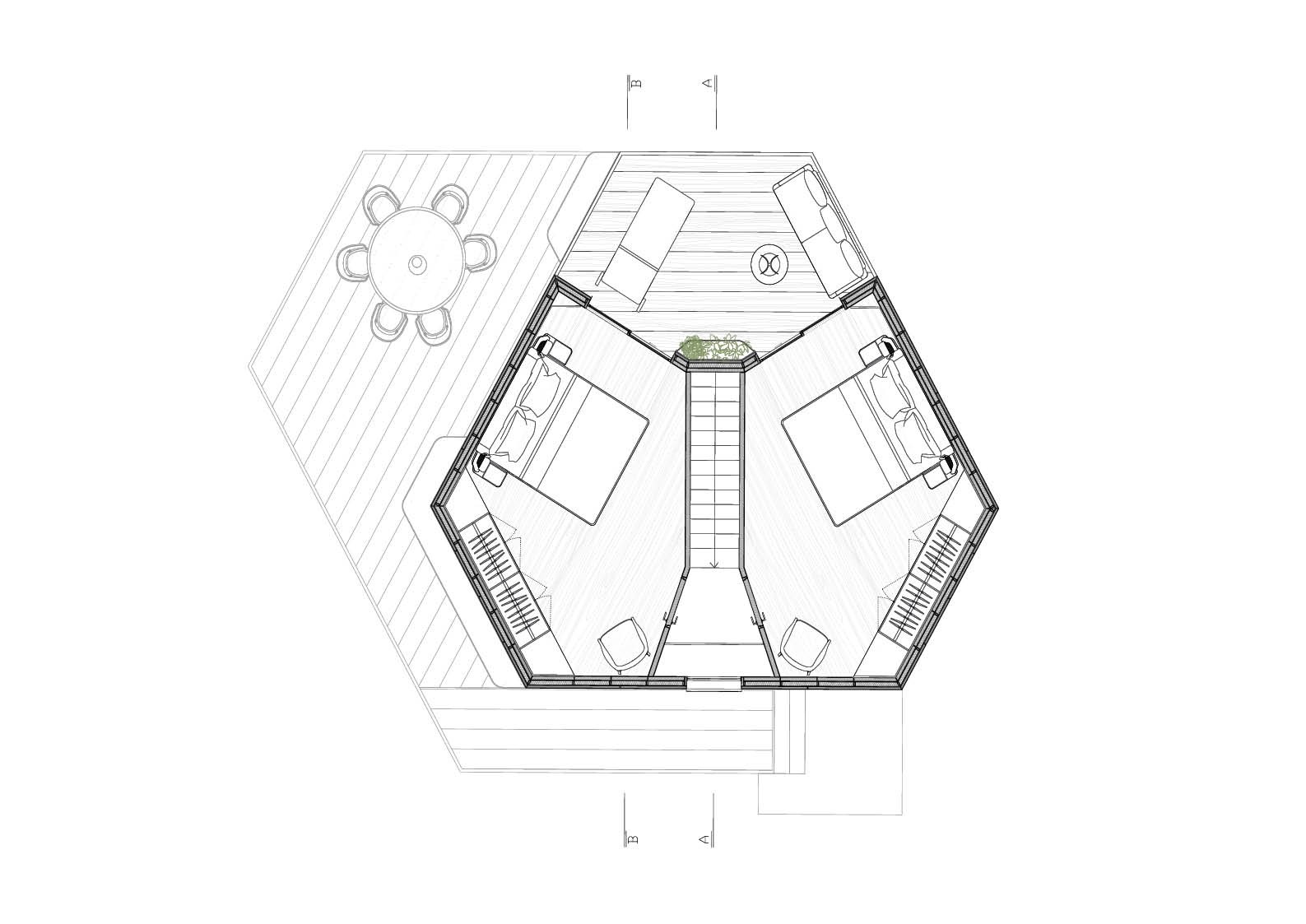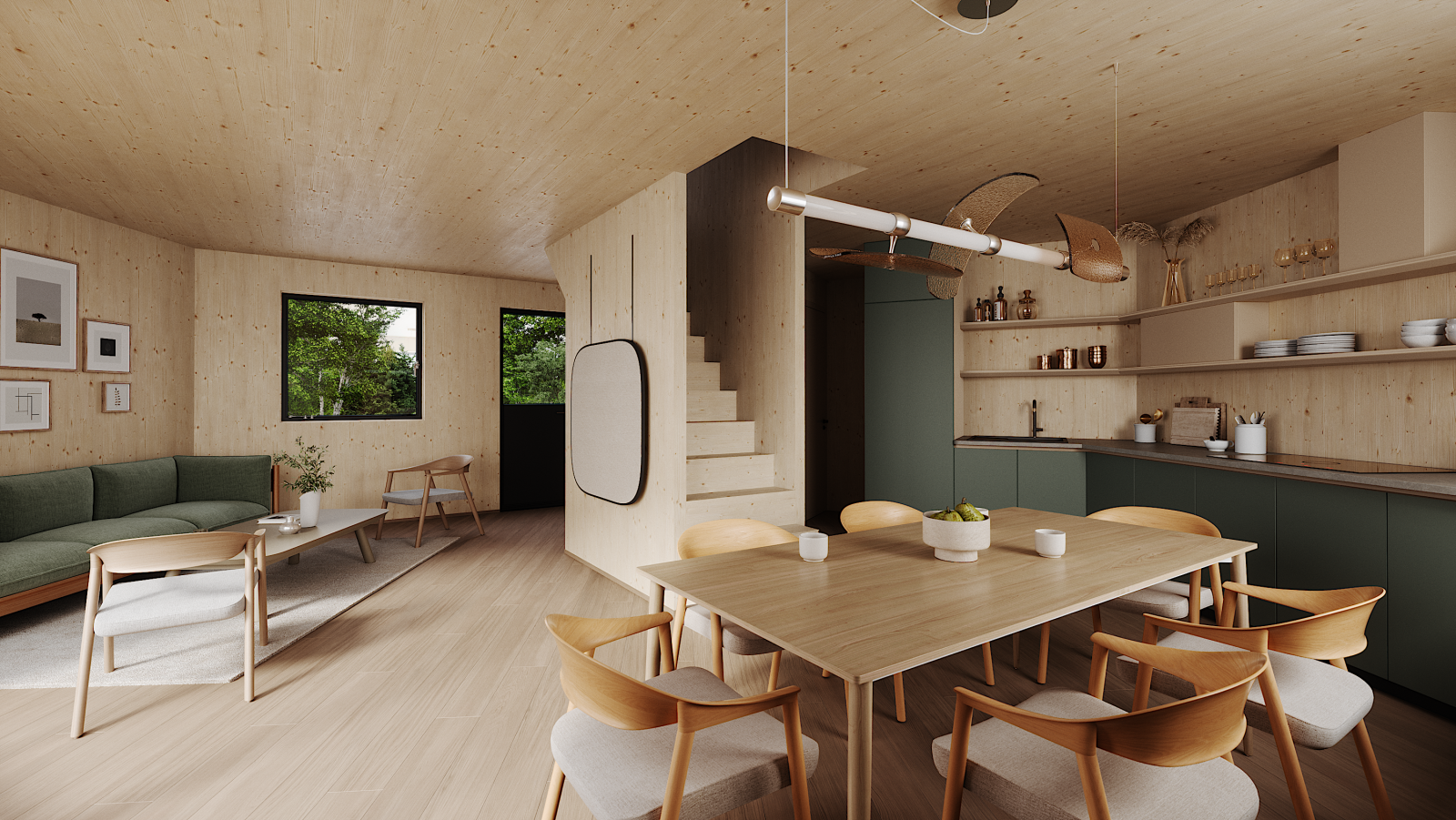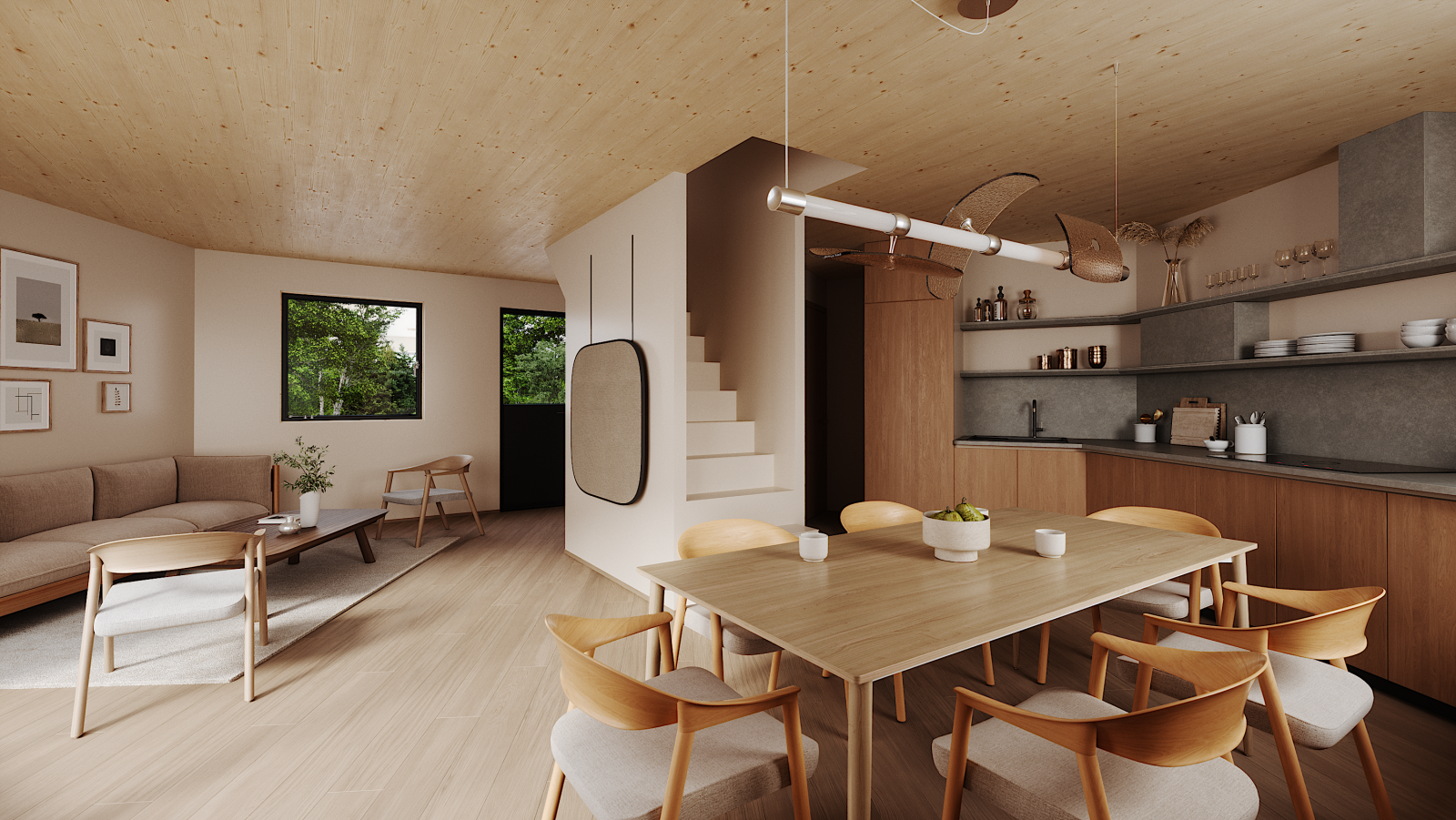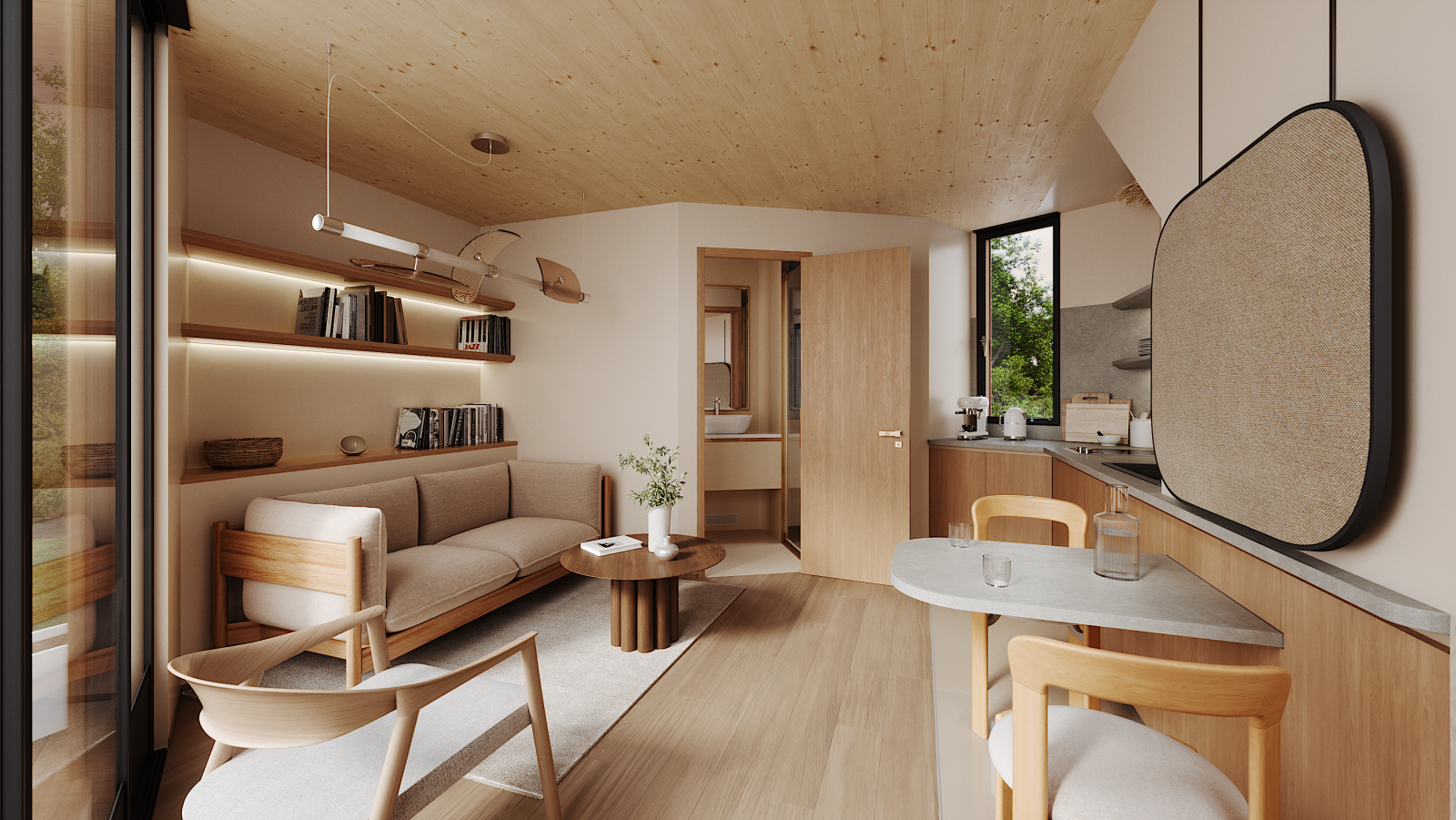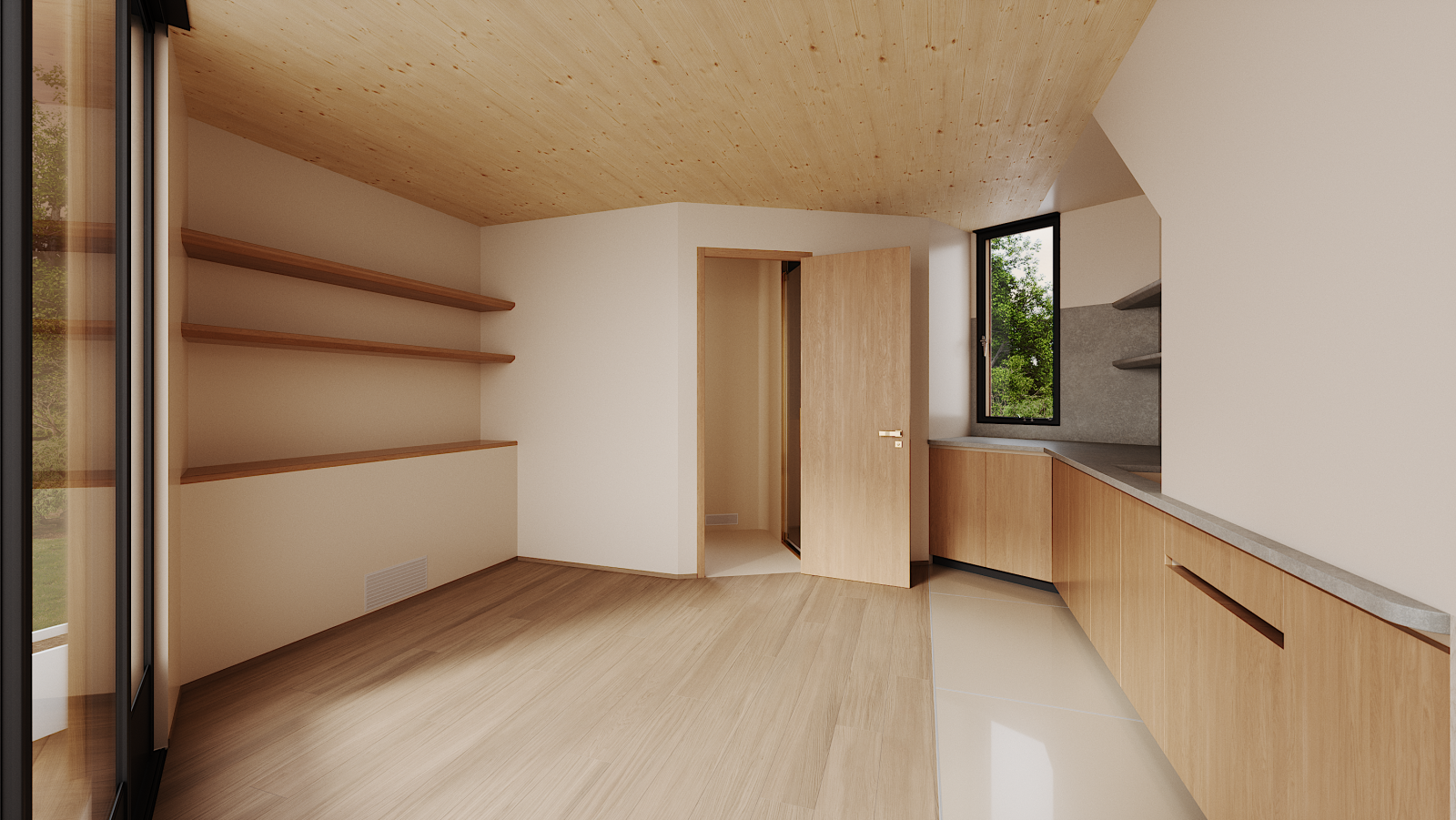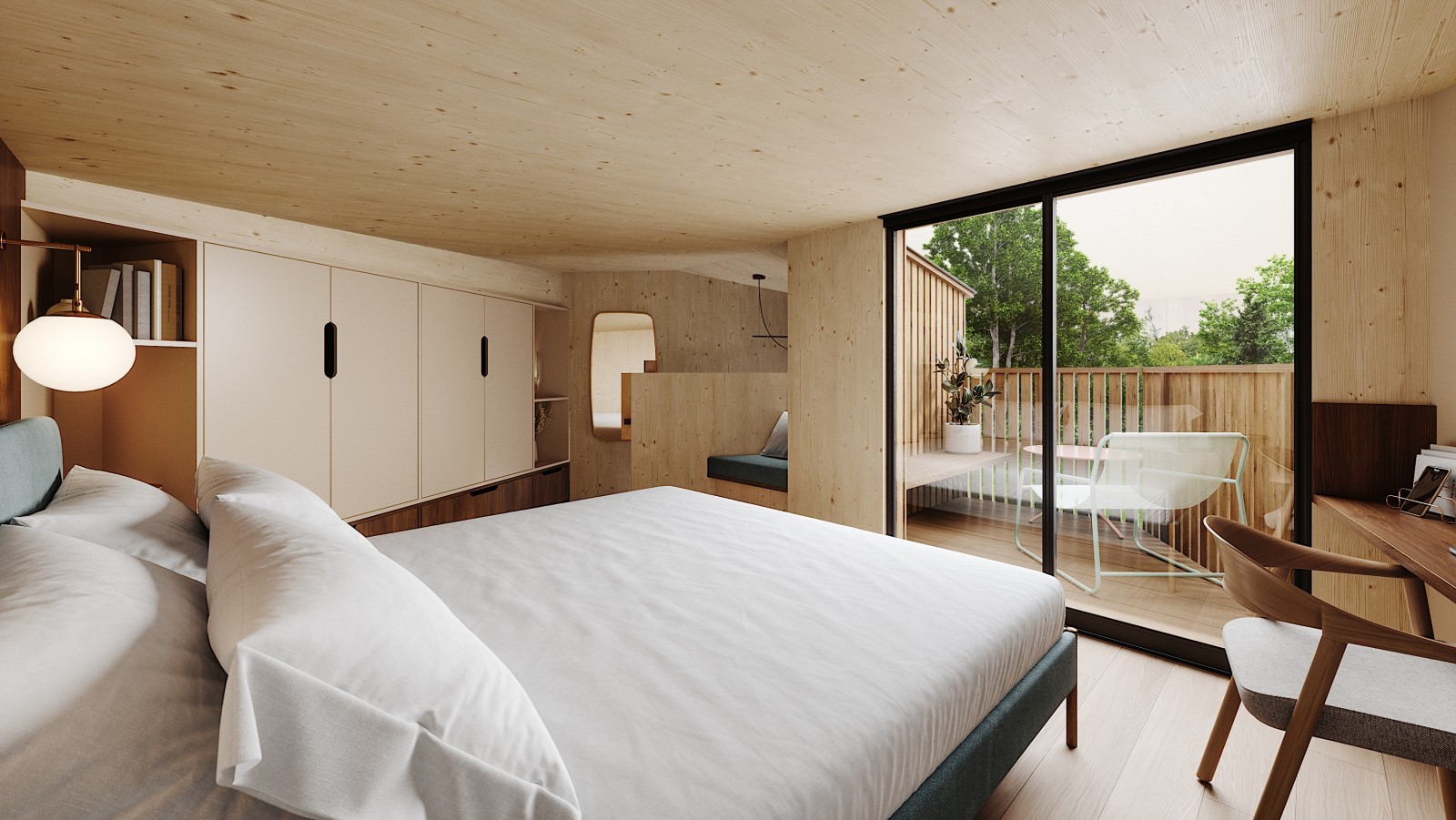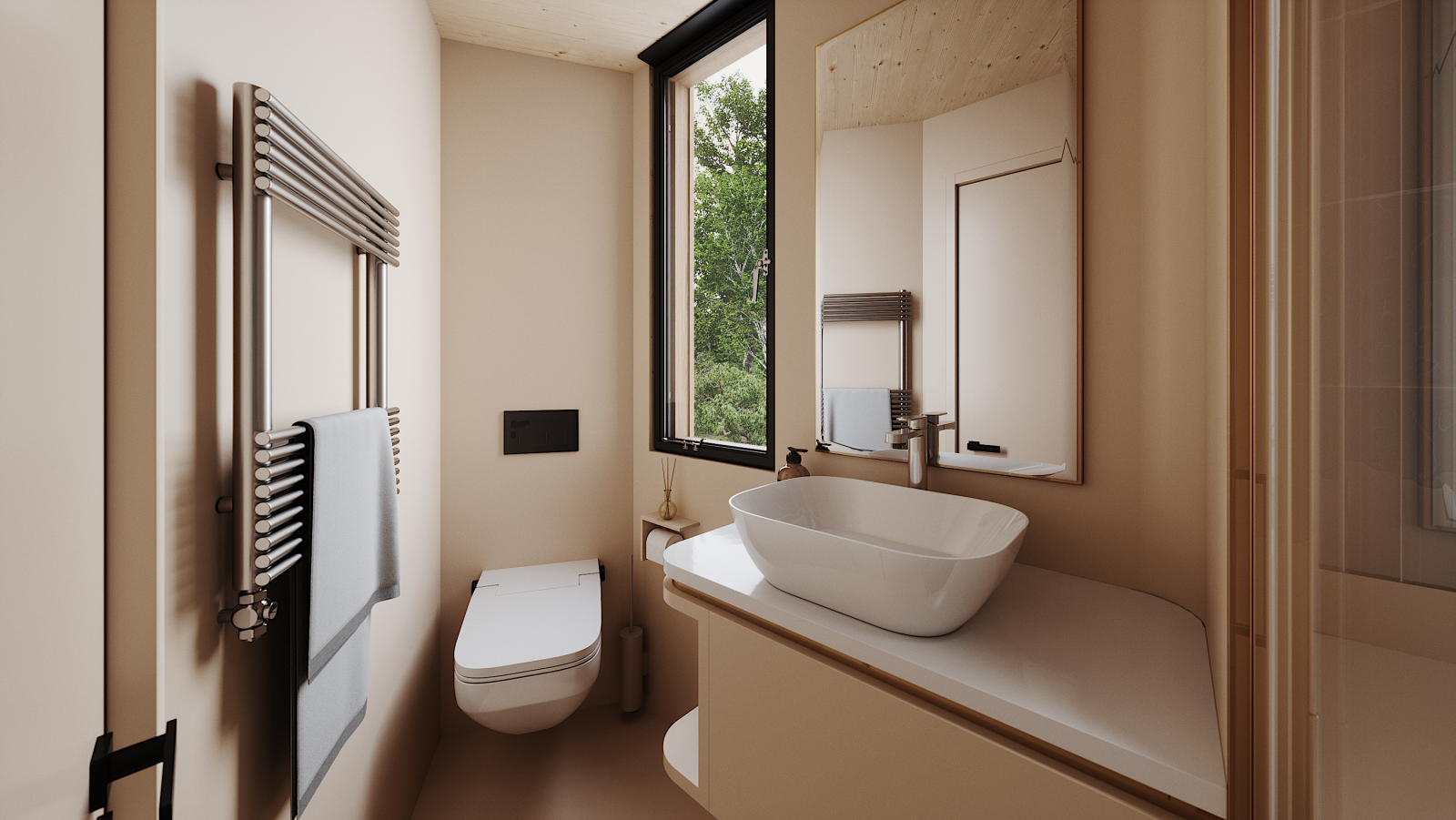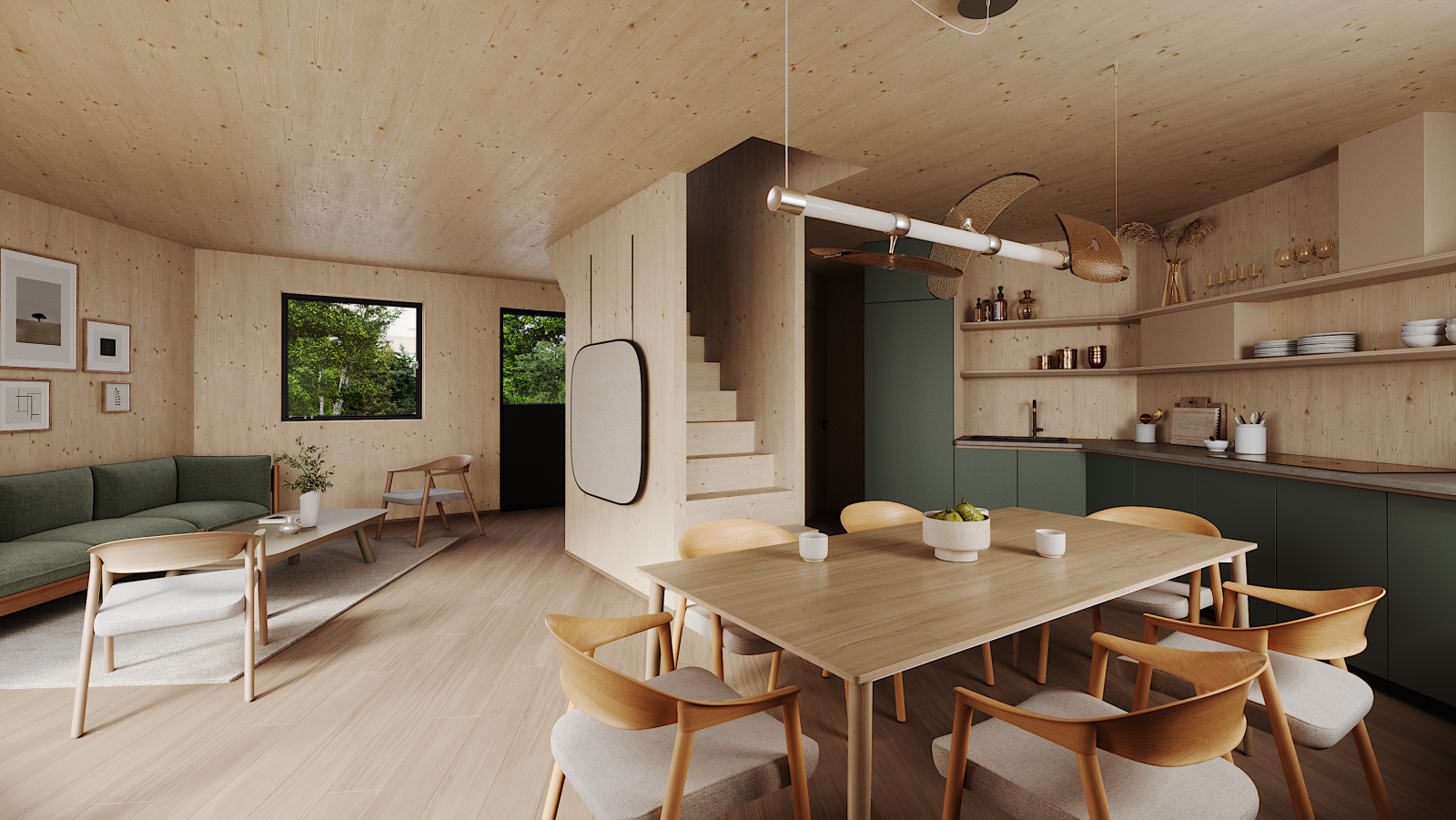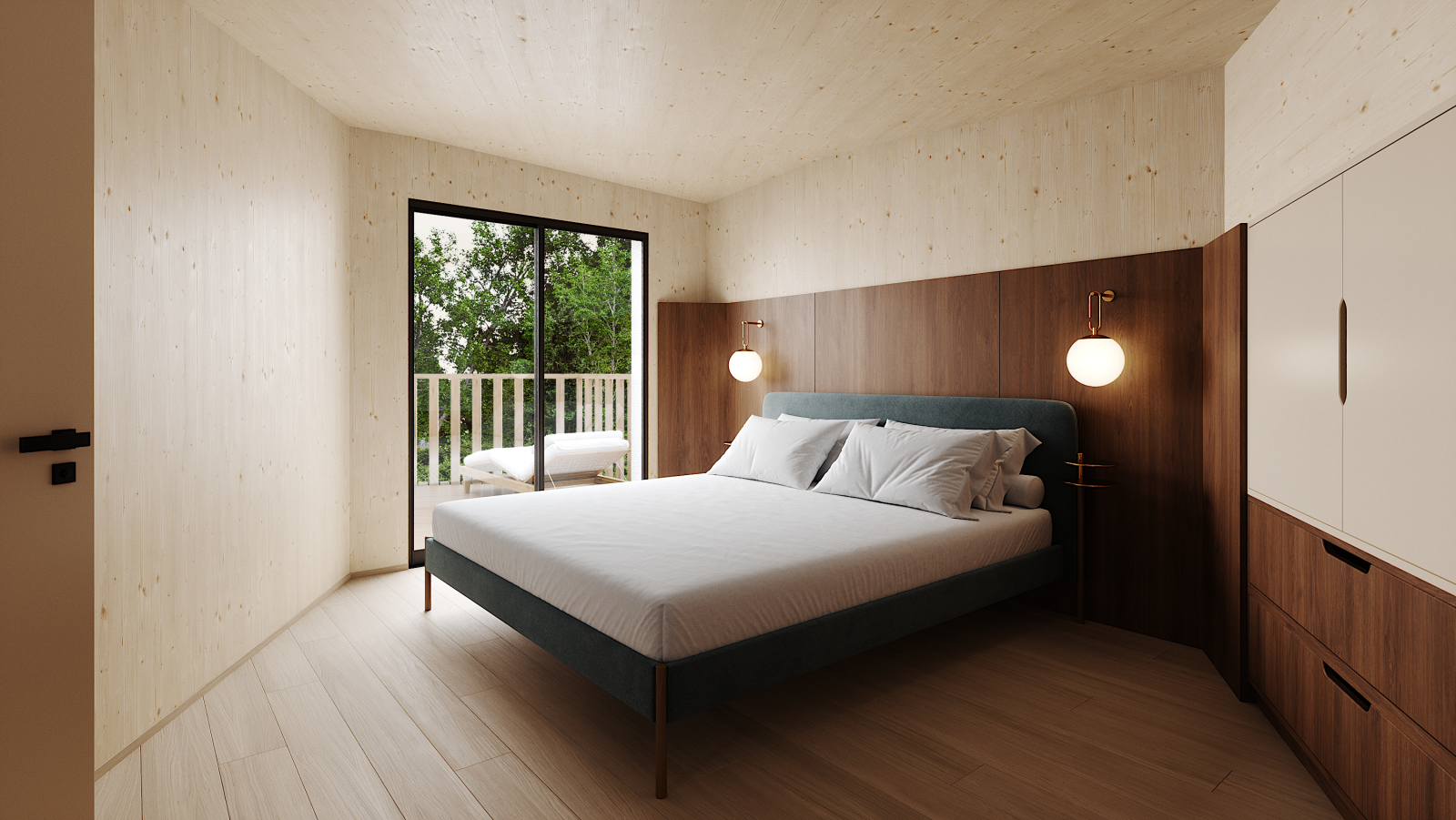
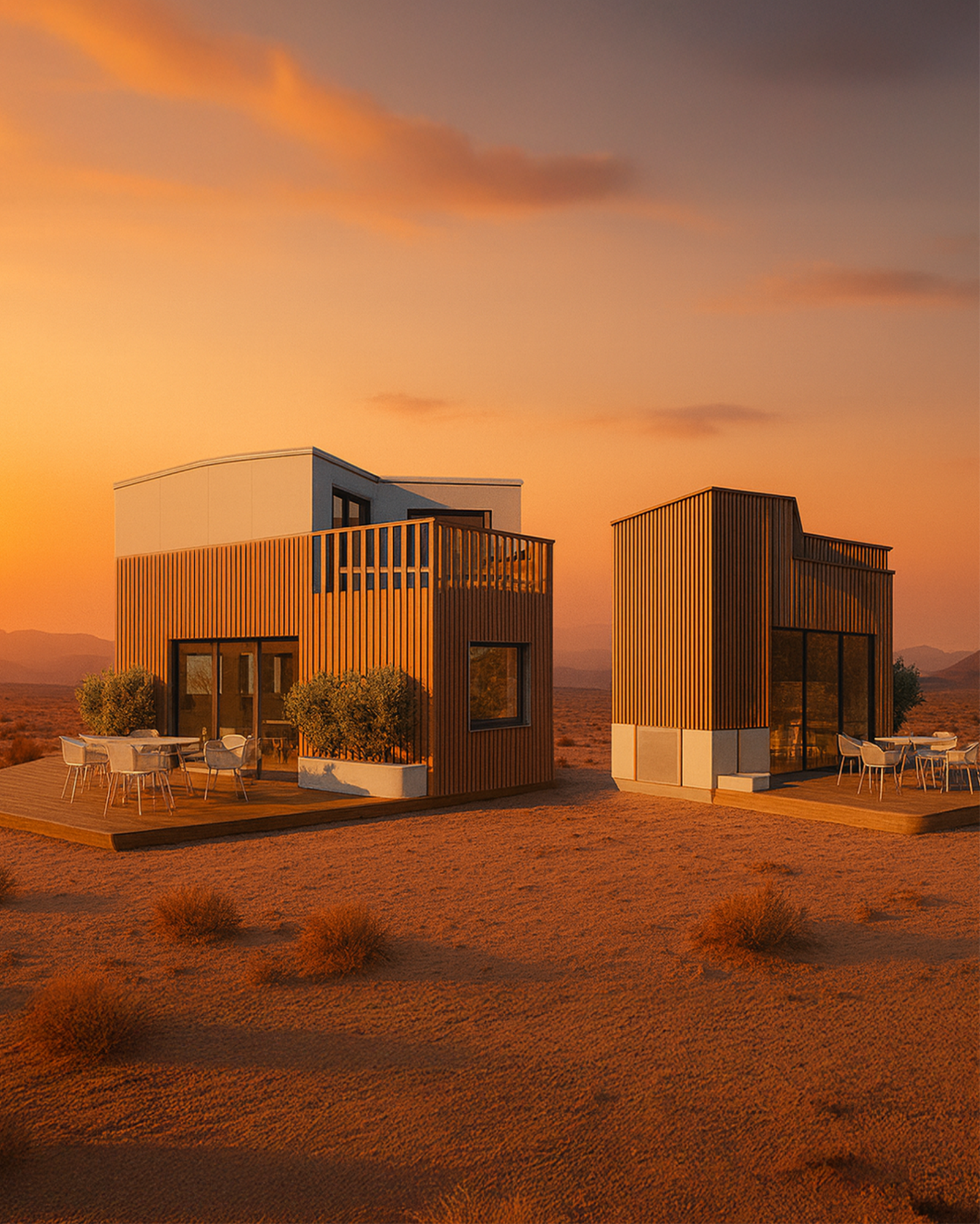
We did not start with a strictly rectangular volume. The idea was for the house to blend into the surroundings without dominating them, moving away from overly regular geometries that often clash with the landscape. Inspired by natural structures such as rocks, stones, and basalt columns, its octagonal shape allows the spaces to be organised in a fluid and continuous manner.
Compact and lightweight architecture
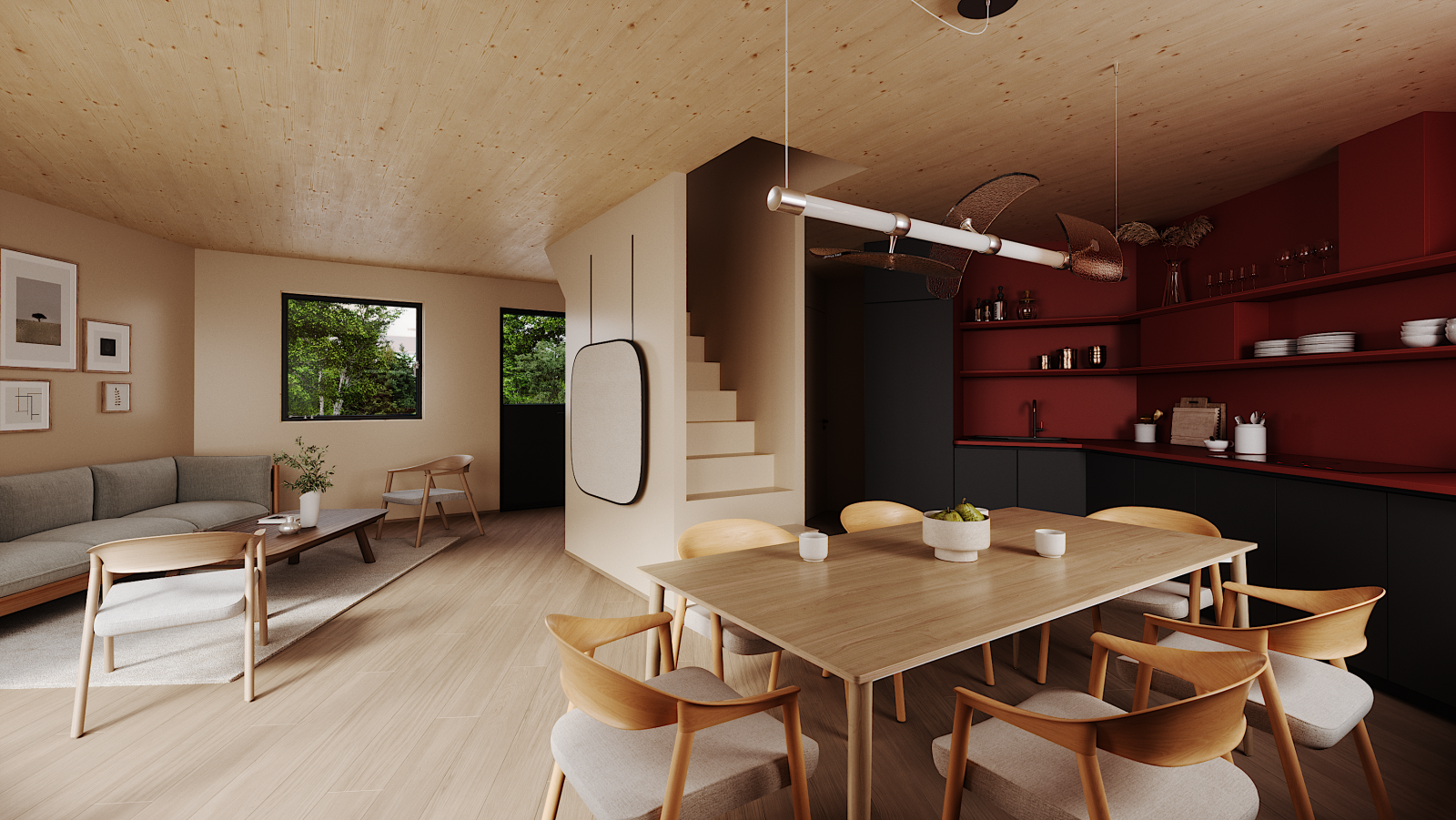
This project draws inspiration from the spirit of tiny houses: compact, lightweight and modular architecture designed for easy installation with minimal environmental impact. The construction is rational and sustainable, while maintaining a high level of usability and a simple, welcoming interior.
The concept of compact housing is a recurring theme in the history of design and architecture: from Jean Prouvé to Charlotte Perriand, Frank Lloyd Wright to Richard Horden, many designers since the 1930s have sought to create lightweight, transportable structures that offer the comforts of home in a small space. Today, advances in materials and industrial processes make it possible to fully realise this ambition.
A house conceived as a design object
The concept of compact housing is a recurring theme in the history of design and architecture: from Jean Prouvé to Charlotte Perriand, Frank Lloyd Wright to Richard Horden, many designers since the 1930s have sought to create lightweight, transportable structures that offer the comforts of home in a small space. Today, advances in materials and industrial processes make it possible to fully realise this ambition.
A house conceived as a design object
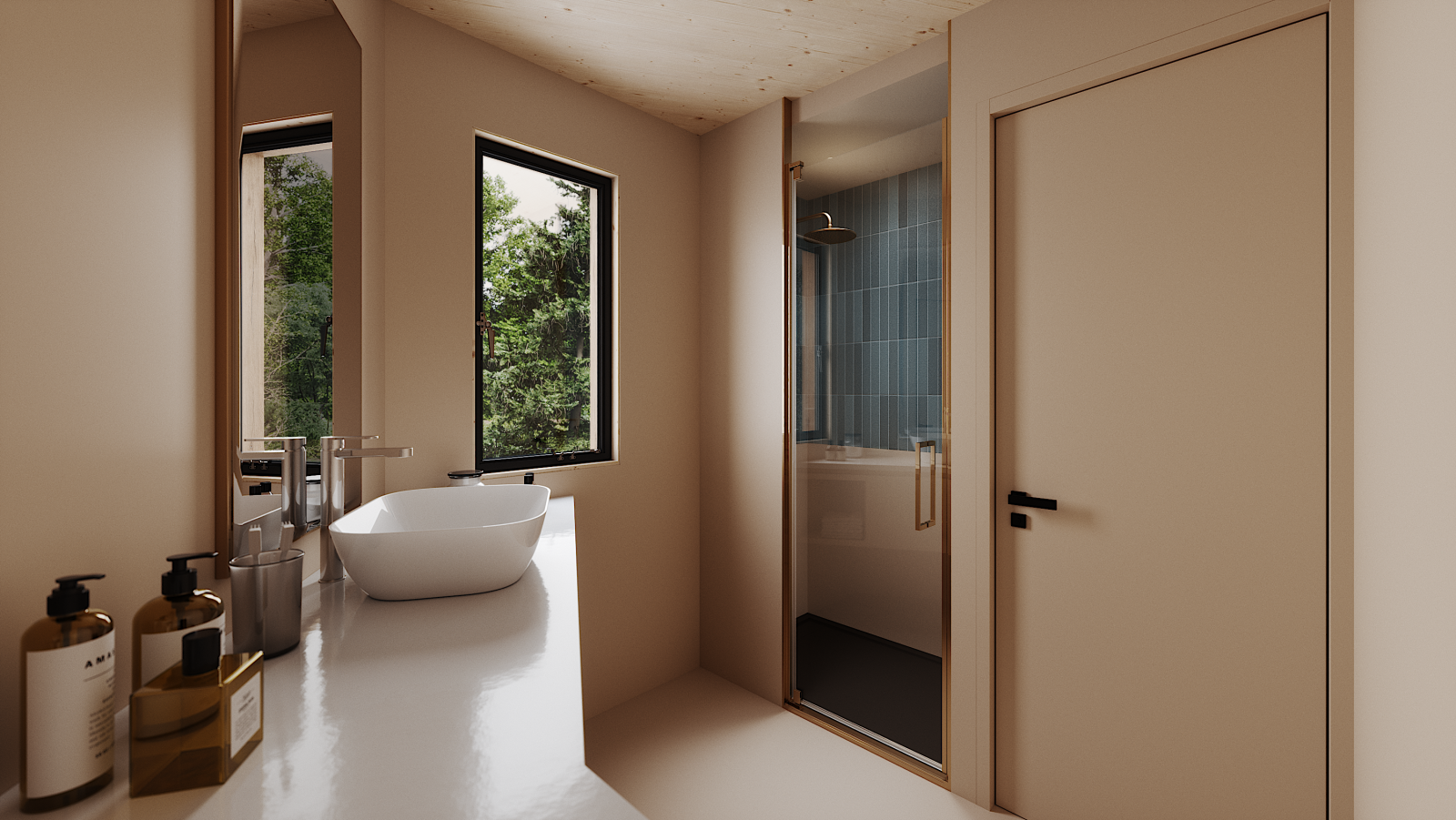
Here, the house is conceived as a design object in its own right, designed down to the smallest detail to combine accurate proportions and comfort of use. Its shape optimizes space and allows it to be oriented on the land to open up views according to the desired environment or exposure.
Every line and material has been carefully considered. In the wooden version, for example, the cladding extends to form a terrace railing, ensuring visual and material continuity. The design also allows for adaptation: the glass panels can be moved and the openings adjusted to meet each customer’s precise needs and desires.
Every line and material has been carefully considered. In the wooden version, for example, the cladding extends to form a terrace railing, ensuring visual and material continuity. The design also allows for adaptation: the glass panels can be moved and the openings adjusted to meet each customer’s precise needs and desires.